Catfish Species: Whiskers, Tail Shape, Color, and Habitat
Use visible traits, habitat, and comparison steps to narrow catfish species with photo clues and safe next checks—what each clue can actually tell you.
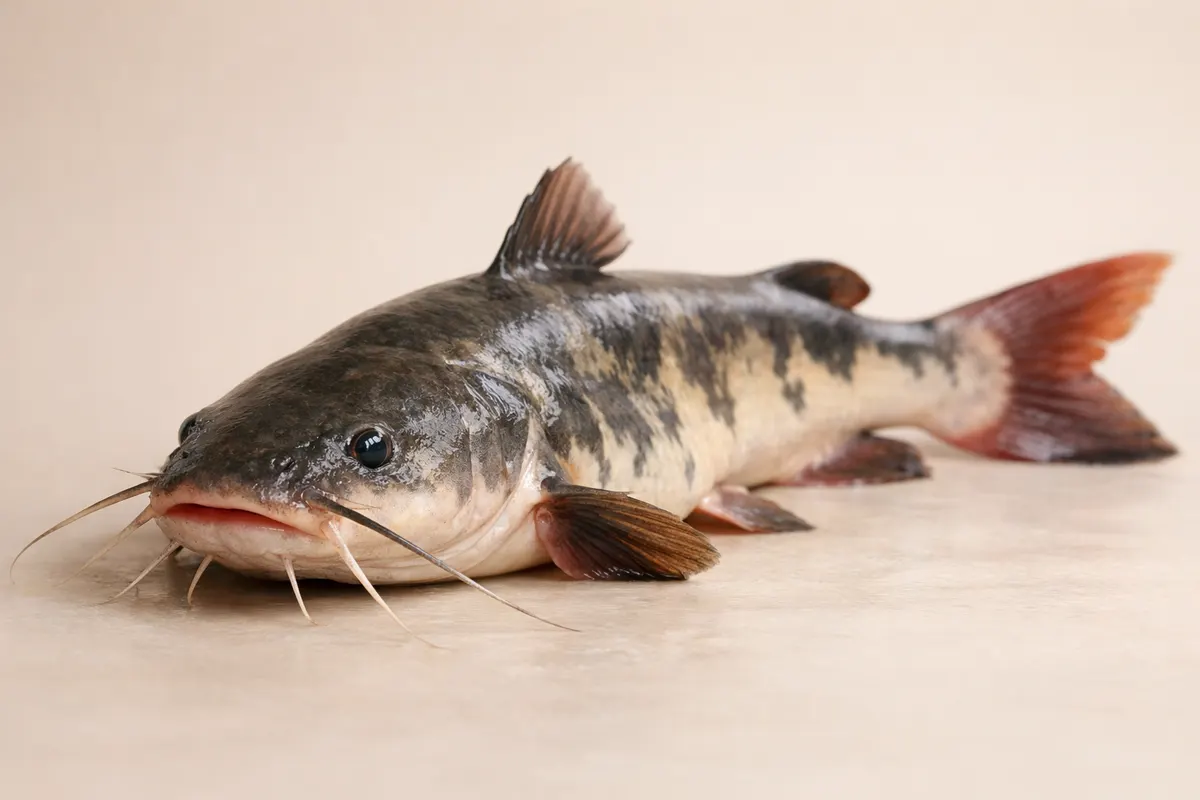
Quick answer for catfish species
Catfish species are best approached as a set of visible clues—barbel placement and length (the "whiskers"), tail shape, fin spines, and habitat—rather than a single definitive feature. Together these clues help you narrow possibilities from dozens to a handful of plausible species, but they rarely prove a species on their own.
The most reliable first checks are barbel pattern (how many and where), tail outline (rounded, forked, emarginate), and whether the fish has obvious armor or suction mouths. Habitat and geography—freshwater vs. brackish, river vs. pond, and the region where you found the fish—are essential context that shifts which species are plausible.
Color and small markings can be helpful when clear and consistent across photos, but they are often distorted by lighting, water color, and camera settings; treat color as a supporting clue. Use the checklist below to gather the strongest signals, then compare likely matches with regional references or the Fish Identifier app as a research aid.
Strongest visual clues
Barbels (whiskers) are the single most diagnostic visible trait for many catfish. Look at the number, length, and placement: maxillary barbels run from the sides of the mouth, mandibular barbels under the jaw, and nasal barbels near the snout. Long, widely spaced maxillary barbels point toward families that forage in low-visibility water; short, dense barbels often belong to smaller, benthic species.
Tail shape survives a surprising amount of photographic variation. A deeply forked tail suggests an active, open-water swimmer; a rounded or slightly emarginate tail favors slow-moving, bottom-dwelling species. Even when the tail is partially obscured, the angle and trailing edge usually give a usable hint.
Fin and head structures—dorsal spine, pectoral spines with serrations, presence or absence of an adipose fin—and mouth position (terminal, subterminal, or inferior) provide strong, hard-to-fake evidence. Armor plating or visible bony plates (as in some armored catfish) is an immediate exclusion for many soft-skinned catfish groups.
Habitat and geographic context are decisive. The same looking fish in a Midwest river and a tropical mangrove are unlikely to be the same species. Record whether the fish was in flowing water, still water, brackish zones, or near the sea; that context can eliminate many lookalikes at a glance.
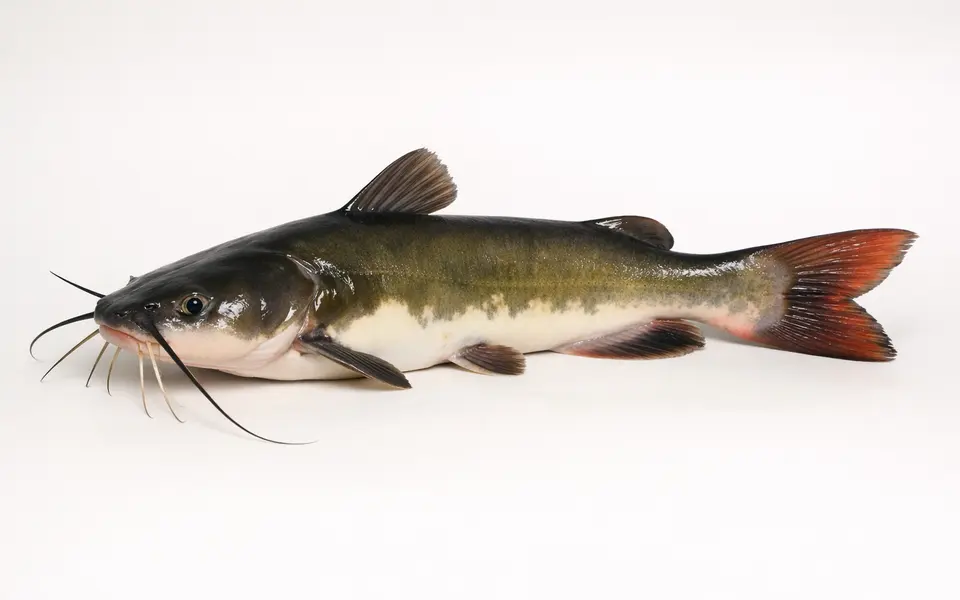
- Barbel pattern: count and note which pairs are present and how long they reach relative to the head.
- Tail outline: forked = active swimmer; rounded/emarginate = bottom-dweller or ambush predator.
- Adipose fin: present in many freshwater catfish families; its absence can narrow families.
- Pectoral and dorsal spines: visible spines or serrations often point to Ictalurid-type catfish.
- Mouth position: inferior mouth = bottom-feeder; terminal mouth = more generalist or midwater feeder.
- Armor/plates: bony plates or scutes immediately suggest loricarioid/armored groups, not soft-skinned catfish.
Weak signals
Color and subtle patterning are common traps. Water color, sun angle, and camera white balance can shift hues dramatically; orange, brown, or green in a phone photo may reflect algae or reflected vegetation rather than true pigmentation.
Single-angle photos and size illusions create false matches. A fish photographed head-on will hide tail shape and throat features; a close crop without scale reference hides relative barbel length. Avoid over-weighting a single shot when other clues are ambiguous.
Surface glare, foam, or mud on the fish can obscure fin edges and mask diagnostic marks. Also be cautious with juvenile specimens—juveniles often have different proportions and markings than adults and can mislead even experienced identifiers.
- Color alone: unreliable unless you have multiple clear, color-accurate photos.
- One-angle shots: insufficient if they hide barbels, tail, or fin bases.
- Size without scale: a photo without an object for scale can mislead tail and barbel proportion judgments.
- Injuries, parasites, or sediment: these can mimic stripes, spots, or unusual shapes.
Comparison workflow
Start by assembling constrained facts: count barbels and note their placement, record the tail profile, observe any armor or suction mouth, and write down the habitat and exact location. These are the 'non-negotiable' clues you will use to filter candidate species.
Next, use a process of elimination: remove any species from consideration that lack a key, observed trait. For example, if you recorded bony plates, remove soft-skinned catfish families; if the fish came from a freshwater inland stream in temperate North America, remove tropical families and marine species.
When you have a shortlist, compare proportional features across candidate species—head width vs. body depth, relative barbel length, and fin insertion points. Regional field guides, museum pages, and verified photos are the best side-by-side comparisons because they show the range of natural variation within a species.
Document ambiguous features and treat them as research notes. If two species remain plausible, capture additional photos (head close-up, full lateral view, tail spread) or note behavior and exact habitat micro-location. Those follow-up cues are often decisive.
- Step 1: Record core facts—barbel count/location, tail shape, armor presence, mouth position, and habitat.
- Step 2: Eliminate impossible families given geography and habitat.
- Step 3: Compare proportions and fin attachments across shortlisted species using reputable photos.
- Step 4: If still uncertain, collect additional photos or behavioral notes (feeding posture, activity period) and keep the result as a tentative research note.
App workflow
After you complete the visual checklist and comparison steps, use the Fish Identifier app as a structured second opinion. Open the app and enter your location and habitat notes first—these contextual fields dramatically narrow candidate sets and reduce false matches.
Submit the clearest photos you have: a full lateral shot, a head close-up to show barbels and mouth, and a tail shot to capture the caudal outline. The app will return suggested matches; treat these as ranked hypotheses to test, not final verification.
Use the app's results to guide further checks: if the app suggests a species, compare its verified reference photos and descriptions with your checklist—especially barbel layout and fin spines. If suggestions disagree with your strongest clues, prefer your field notes and re-check photos rather than relying solely on the app.
- Enter location and habitat before sending photos to narrow results.
- Provide multiple, clearly framed photos: lateral, head/barbel detail, and tail.
- Treat app matches as hypotheses: verify with your strongest clues and regional references.
- Record the app suggestions as research notes and seek confirmation for important or risky identifications.
Related guides
Next step: check your clues with Fish Identifier
After you collect barbel, tail, and habitat notes, use the Fish Identifier app on your device to generate ranked candidate species. Enter location and submit your clearest photos as supporting evidence, then compare the app’s suggestions with your strongest clues. Treat any match as a research lead—verify with regional references or experts before claiming a definitive ID.

Frequently asked questions
How many barbels does a catfish usually have and how useful is that for ID?
Most catfish have several pairs of barbels—commonly maxillary (side), mandibular (under jaw), and sometimes nasal barbels. Counting which pairs are present and their relative length is highly useful because barbel patterns are consistent within many families and help exclude entire groups that lack those configurations.
Can I identify a catfish species by color or pattern alone?
Color and pattern are supporting clues but are rarely enough on their own. Light, water color, and camera settings change hues dramatically. Use color to confirm an ID only when it matches other strong clues like barbel structure, tail shape, and habitat.
What are common lookalikes to watch for when identifying catfish species?
Armored catfish and some suckermouth species can look like distant relatives because of body plating or flattened profiles. Juvenile or injured fish may resemble other species. Always cross-check armor presence, mouth type, and geographic range to avoid common misidentifications.
If I'm still unsure after photos, what should I do next?
Treat the result as a research note: gather more photos (lateral, head, tail), record precise location and habitat details, and consult regional guides or an expert. You can use the Fish Identifier app to generate candidate matches, but keep those results as hypotheses to verify with your strongest field clues.