
How to Tell Fish Lookalikes Apart: Practical ID Tips
Quick, practical ways to spot fish lookalikes using habitat, fin shape, and body proportions. Photo tips and safe next steps for clearer identifications.
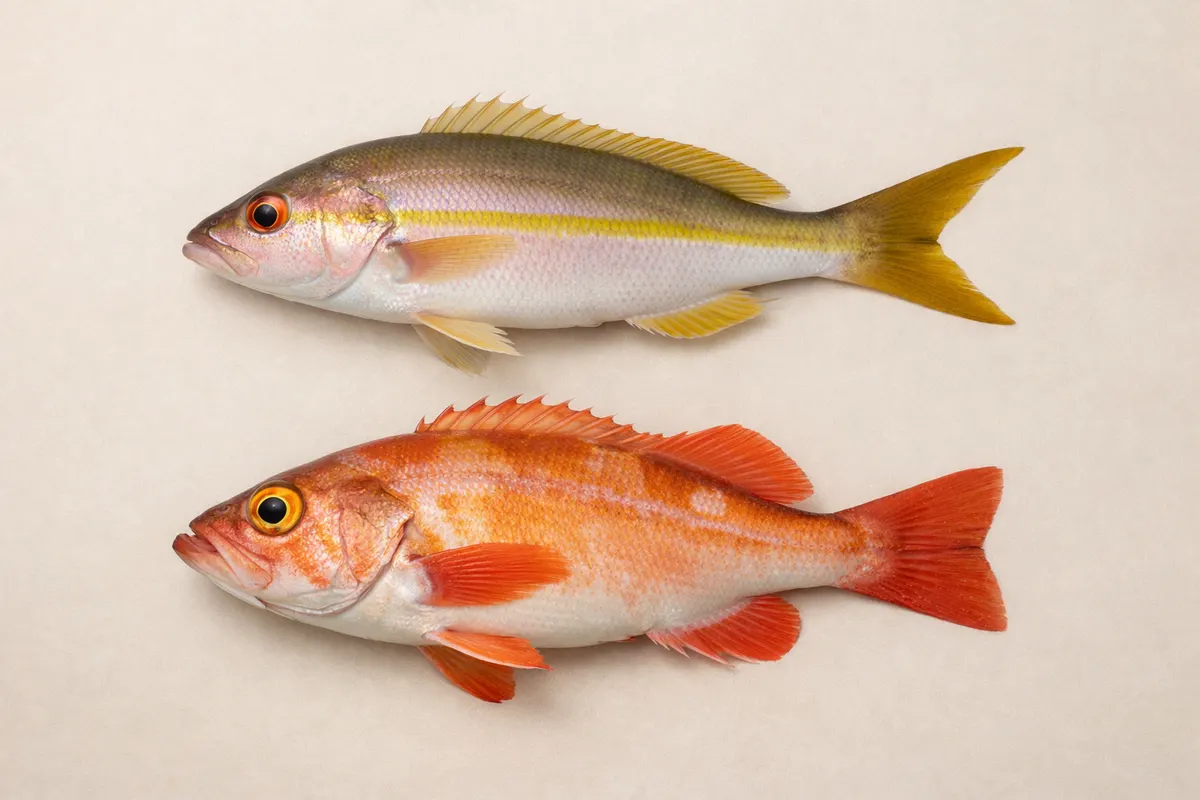
Quick answer: what to check first for fish lookalikes
Fish lookalikes are separate species that appear very similar at a glance. The fastest productive checks are habitat (where you saw the fish), overall body proportions (slender vs. deep-bodied), and fin arrangement — especially the dorsal and tail shapes. Start with those three and you’ll separate many common confusions, for example small reef gobies versus juvenile blennies where color alone misleads.
If you have a photo, examine the silhouette at full image size rather than relying on color. Underwater light shifts and camera white balance often wash out or change hues, so proportions, fin counts, and mouth shape are more reliable than exact color patches. Record where and when the photo was taken: tide, depth, and substrate often narrow possibilities quickly.
When clues conflict — for example habitat fits one species but fin counts fit another — prioritize anatomical characters you can count (like spines in the dorsal fin) over subjective features like shade. Use those concrete checks to decide whether a confident ID is possible or whether you should collect a second photo or consult a specialist.
- Start with habitat, body proportions, then fin arrangement in that order.
- Favor countable features (spines, rays, fin base length) over color.
- Keep date, time, and depth with photos — environmental context is decisive.
Fish lookalikes: a fish identification guide
A lookalike situation happens when two or more species share overlapping color patterns, size ranges, or behaviors so that a casual view or single photo can’t reliably distinguish them. This is common on reefs, where juvenile forms frequently mimic adults of other species, and in estuaries where several hardy species share a similar silvery profile. The goal of a fish identification guide is not to remove every doubt immediately, but to give a repeatable method to prioritize the evidence you have.
In practice, that means using structured checks: collect context (location, depth, substrate), measure or visually compare the fish’s proportions (body depth relative to length), and inspect fin anatomy (number of dorsal spines, shape of the caudal fin). These features are less affected by lighting and provide stronger taxonomic signals than color alone.
Think of the guide as a decision ladder: if step one (habitat) rules out half the candidates, step two (proportions) rules out most of the rest, and step three (fin arrangement and mouth type) often gives you a confident call. When any step fails or is ambiguous, the guide steers you to next-best evidence — additional photos, a specimen measurement, or a specialist consultation.
- Context first: location, tide, and substrate narrow candidate species.
- Proportions second: body depth versus length differentiates many lookalikes.
- Anatomy third: dorsal spines, fin bases, and mouth placement are decisive.
Fish visual clues to spot lookalikes
The strongest visual clues for separating lookalikes are measurable or countable features: numbers of dorsal spines and soft rays, pectoral fin base length, and the position of the pelvic fins relative to the pectorals. Those features are less prone to color distortion and can usually be read from a medium-resolution photo if the fish is framed well.
Silhouette and body proportions are next in reliability. Compare the maximum body depth to total length; a deep-bodied fish like a sergeant major will appear noticeably taller in profile than a slender grunt of the same length. Tail shape is also instructive: forked tails often indicate fast-swimming pelagics, while rounded tails point to maneuverable reef dwellers.
Color and pattern can mislead but still help when used carefully. Look for stable pattern elements—distinct bar positions, eye stripes, or the presence of a lateral line pigment—rather than overall hue. Note that juveniles of many species change color as they mature, and that water depth changes which wavelengths reach your camera, so treat color as supportive, not primary evidence.
Eyes, mouths, and teeth tell different stories: a terminal mouth on the tip of the snout suggests a grazer or predator that takes prey in front; a subterminal (underslung) mouth clues you into bottom-feeding habits. If the photo shows the teeth or a protruding jaw, that may eliminate several lookalike families at once.
- Countable anatomy: dorsal spines/rays, anal rays, and pectoral fin base length.
- Silhouette checks: body depth vs. length and tail shape (forked vs. rounded).
- Mouth position: terminal vs. subterminal indicates feeding niche and family.
- Stable pattern elements over color: bars, ocelli (eye spots), and lateral line marks.
Step-by-step workflow
Step 1 — Collect context: note GPS or approximate location, water type (salt, brackish, fresh), depth, substrate (sand, rock, seagrass), and behavior (resting on substrate, hovering, schooling). Habitat alone can rule out many taxa; for example, true reef gobies rarely occur in open-water grassbeds and vice versa.
Step 2 — Get the silhouette: take or crop a photo to a side-on profile and compare proportions. If you can, measure or estimate total length against a known reference (diver fin, ruler, or a bait bucket). Many field guides list body depth ratios or show proportion diagrams useful for direct comparison.
Step 3 — Count and describe fins: note the number of spines in the first dorsal, whether the dorsal is continuous or split, and whether the tail has a notch or is fully forked. Write down mouth position, presence of barbels, and the shape of the pectoral fins. These features can be checked against species descriptions or the quick morphological keys in regional guides.
Step 4 — Cross-check color patterns and unique marks: look for ocelli (eye spots), bars, or unique blotches and record their position relative to fins. If your photo is the only evidence and the anatomical counts are ambiguous, seek a second angle photo or a short video to reveal more details.
Step 5 — Decide on confidence and next steps: if you can match anatomy and habitat to a single candidate, label it with high confidence. If two or more species remain plausible, label the record as probable and supply the key conflicting features. When in doubt, consult a specialist or use a trusted identification resource — see the Fish Visual Checklist for additional visual clues and follow-up.
- Collect habitat and behavior details immediately with the photo.
- Crop to a lateral profile to evaluate proportions first.
- Count dorsal spines and fin rays when visible; use those counts to eliminate families.
- Record ambiguous features and mark the sighting as ‘probable’ or ‘uncertain’ rather than certain.
Practical examples of common fish lookalikes
Example 1 — Juvenile damselfish vs. juvenile chromis: Both have small compressed bodies and can be blue, but damselfish juveniles often sit within branching coral and show a deeper body depth, while chromis are slimmer and more likely to dart in open water above the reef. Count the dorsal fin segmentation: damselfish commonly have a noticeable row of short spines followed by soft rays; chromis dorsal profiles are smoother.
Example 2 — Two similar reef wrasses: A slender wrasse and a similar-bodied wrasse may differ only in a subtle head marking and the shape of the tail. Focus on the mouth and teeth shape: wrasses vary from small terminal mouths for picking prey off rock to larger protrusible jaws for suction feeding. A side-on photo that captures mouth shape often separates lookalikes more reliably than color.
Example 3 — Small scorpionfish vs. a mottled goby on a sandy bottom: Both can have mottled camouflage, but scorpionfish typically have a deeper head profile, larger pectoral fins, and venomous spines on visible dorsal fins. When in doubt, assume the higher-risk identification for handling and safety purposes and avoid contact; photograph from a safe distance and note fin spine positions.
Example 4 — Silvery schooling fish in estuaries: Many juvenile jacks, herrings, and silversides are superficially similar. Tail fork depth and lateral line curvature are reliable differentiators here. Jacks show a more pronounced fork and stronger keel near the caudal peduncle; herrings will have a straighter, more compressed body and a different scale texture visible in close-up images.
- Juvenile damselfish vs. chromis: habitat and dorsal profile separate them.
- Wrasse lookalikes: mouth and jaw shape beats color patterns.
- Scorpionfish vs. goby: head depth, pectoral fins, and fin spines indicate risk.
- Small schooling silvers: check tail fork and lateral line for family-level ID.
Limitations and when to verify fish lookalikes
Even with careful photos and habitat notes, some lookalikes remain ambiguous. Lighting, angle, and partial occlusion often hide the fin spines or exact mouth position that you need to be sure. In those cases label the sighting as 'probable' and record which features were missing so other reviewers know the source of uncertainty.
Safety and legal limits matter. Never handle unknown fish without checking for venomous spines or legal protections. When a species could be regulated (protected, commercially important, or invasive), get verification from a local fisheries agency or an experienced ichthyologist rather than relying solely on a single photograph.
Taxonomic limits: some species are only separable by small meristic counts (scale counts, gill raker number) or genetic tests. If the living fish can’t be safely collected for those counts, treat that identification as unresolved and use descriptive metadata (habitat, behavior, photos) for record-keeping instead.
If you need a definitive identification for research or a legal purpose, use multiple evidence types: a clear lateral photo, a close-up of diagnostic fins, behavior notes, and, where allowed and ethical, a voucher specimen examined by a taxonomic specialist. For everyday sightings, practical confidence (high/probable/uncertain) is usually sufficient.
- Label uncertain records as ‘probable’ and list missing diagnostic features.
- Do not handle or collect fish without training and legal permissions.
- Some separations require scale/gill-raker counts or genetics — note when these are needed.
- Seek expert verification for regulatory, research, or invasive species concerns.
Related guides
Next step: use an identification tool as an optional check
If you've checked habitat, proportions, and fin details and still have uncertainty, try an automated second opinion at the Saltwater Fish Identifier: https://fish-identification.app/tools/saltwater-fish-identifier. Use the tool as a first-pass after you collect clear photos and context; treat its suggestions as provisional and follow up with experts for any safety or regulatory questions.
Take the next step →Frequently asked questions
How can I use a photo to narrow fish types when the image is blurry?
Start with silhouette and proportion checks: crop to a side-on view and compare body depth to length, then inspect tail shape and fin placement. Even a blurry image often preserves the overall silhouette and tail fork, which can eliminate many families. Note habitat and behavior from the sighting since location plus a rough silhouette can narrow options substantially even when fine-scale detail is missing.
What should I photograph to help experts identify fish lookalikes?
Aim for a clear side-on profile that shows the entire fish, a close-up of the head and mouth, and one or two shots of the dorsal and tail fins. Include an object for scale if safe to do so (diver’s glove or ruler), and note depth, substrate, and behavior. Multiple angles let experts count fin spines and compare proportions, which are often decisive for lookalikes.
When should I assume a lookalike might be dangerous or venomous?
If the fish has broad, fleshy pectoral fins, spiny dorsal rays, heavy camouflage, or a deep head profile, treat it with caution: many venomous reef species display one or more of those traits. If you cannot rule out a scorpionfish-like profile, maintain distance and photograph from safety. When handling is required (e.g., research or rescue), consult local regulations and trained personnel.
Which quick checks help separate small estuary fish fish types when I only have one photo?
Check tail fork depth, lateral line curvature, and mouth position in the single available photo. Jacks and similar predatory estuary species will show a deeper fork and a more streamlined body, while silversides and herrings keep a more compressed profile and a straighter lateral line. Habitat notes (tide, salinity) combined with those single-photo clues often let you narrow candidates to a short list.