
WV Fish Identification: Clear Visual Clues and Practical Steps
Learn how to identify WV fish with habitat cues, fin and mouth details, and a step-by-step workflow for reliable freshwater ID in West Virginia.
Quick answer for WV fish identification
WV fish identification is mostly a matter of matching visible body shape, fin arrangement, mouth position and habitat. In West Virginia you’ll usually be working with freshwater species—trout in cold streams, bass and sunfish in rivers and reservoirs, and catfish in deeper pools—so start by noting where you found the fish and whether the water was flowing, clear, or murky.
A fast, evidence-based approach: photograph the fish from both sides and the top, note the dorsal and tail shapes, check for barbels or teeth at the mouth, and record water type and depth. Those details will let you narrow the possibilities to a short list of likely species even before consulting a reference or app.
What WV fish identification means in practice
Identifying fish in West Virginia means using a combination of visual features and context to reach a practical conclusion—one that is useful for anglers, citizen scientists, and casual observers. Because WV waters contain many lookalike species, identification is rarely about a single flashy color; it’s about proportions (body depth versus length), fin placement and shape, and the mouth’s position relative to the snout.
For example, distinguishing a smallmouth bass from a rock bass relies less on color and more on head length, mouth extension relative to the eye, and scale pattern across the base of the dorsal fin. Likewise, trout species are best separated by spotting patterns, adipose fin presence, and the stream habitat they occupy (cold, oxygenated headwaters versus warmer tailwater stretches).
Because lighting and water color can shift hues underwater, WV fish identification leans on structural clues—fin counts, barbel presence, scale texture and gape—supported by habitat notes. Treat color as supporting evidence, not the sole basis for a firm ID.
fish visual clues to check in WV waters
Record several visible features before choosing a species: overall body profile, the position and outline of the dorsal fins, tail shape, mouth position, markings, and any barbels around the mouth. Photograph or describe those details without forcing them into a family-level shortcut. Fin connections and proportions can be difficult to judge in a folded, partly hidden, or poorly lit specimen. Compare the combined pattern with a West Virginia species guide that shows the relevant alternatives.
Habitat and behavior are also visual clues: a fish seen in riffles and pocket water is more likely to be a trout or darter than a bass; one holding around woody snags or deep holes could be catfish or sucker. Combine these contextual cues with body features for a confident shortlist.
Below are practical cues you can check from photos or quick field notes. Start at the head and work back: mouth and barbels, gill cover and operculum markings, dorsal fin structure, scale pattern, and tail. If you can measure or estimate relative proportions (head length to body length, eye size relative to head), those numbers are highly diagnostic for distinguishing close lookalikes.
- Mouth: record its position and outline in a clear side view, without relying on that feature alone.
- Dorsal fins: note their positions, connections, and visible spines or soft rays; verify the combination in a regional key.
- Barbels: record whether they are visible, their placement, and approximate length; compare with the rest of the fish.
- Tail: document its outline with the fin naturally visible; damage or folding can change its apparent shape.
- Markings and lateral line: compare several patterns and structural details with documented examples.
- Fish types: use a tentative group-level shortlist to choose the appropriate regional guide before attempting a species name.
Step-by-step workflow for identifying a WV fish
Follow a reproducible workflow so biologists and other observers can verify your ID later. Start with location and habitat: record stream name or lake, GPS if possible, water temperature or whether the water felt cold or warm, and whether the fish was in current, near vegetation, or in deep water. Habitat cuts down the candidate list dramatically before you examine small morphological details.
Next, document the fish visually. Get at least two side profiles and a clear view of the mouth area; a head-on shot of the snout and mouth is especially helpful for judging mouth position and presence of barbels. If you can safely handle the fish, photograph the dorsal fin base and the tail margin close-up. Each added angle increases your ability to discriminate among similar species.
Third, note measurements and proportions if possible. Even rough estimates—fish length, head length as a percentage of body length, gap between dorsal fin and tail—help match the specimen to species descriptions. If you cannot measure, use an object of known size (coin, ruler, fingertip) in the shot for scale.
Finally, compare your assembled evidence to references. Start with regional keys or state guides and progress to narrower resources if needed. If you still have doubts, record the evidence and reach out to a WV fisheries department, local university ichthyologist, or a community ID forum and include your photos and habitat notes.
- Step 1 — Record habitat: stream vs. lake, depth, flow, and substrate.
- Step 2 — Photograph multiple angles: both sides, dorsal base, head/mouth, and tail.
- Step 3 — Note diagnostic features: barbels, dorsal fin type, mouth position, scale texture.
- Step 4 — Measure or include a scale object in photos for size reference.
- Step 5 — Cross-check with regional keys, then seek expert review if uncertain.
Examples
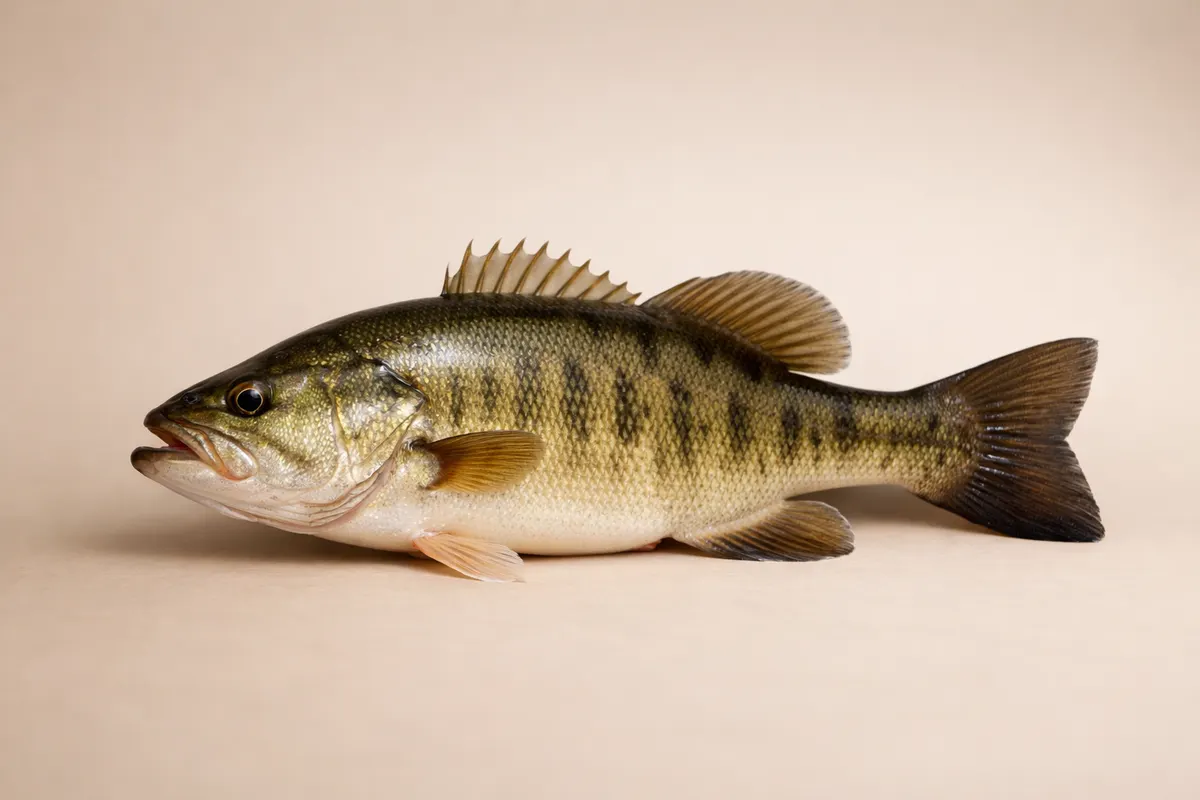
Practical examples help lock in the workflow. Smallmouth bass versus largemouth bass: smallmouth have a more streamlined, laterally compressed body, a mouth that does not extend past the eye, and vertical bars on the flank. Largemouths show a deeper body, a mouth extending well past the eye, and a darker horizontal band along the flank. Habitat also differs slightly: smallmouth prefer rockier, clearer riffles and runs while largemouth often occupy vegetated, slower waters.
Trout distinctions—brook, brown and rainbow—depend on spot pattern and habitat. Brook trout show worm-like vermiculations on the back and lighter spots often on a darker ground; brown trout have distinct dark spots with pale halos and may be found in larger, cooler rivers; rainbow trout have a pink lateral stripe and black spots concentrated toward the tail. In WV high-elevation streams, brook trout are the classic native species to expect.
Catfish examples: channel catfish and flathead catfish are both common in WV reservoirs and larger rivers. Channel catfish have an emarginate to forked tail and spots in juveniles; flatheads have a broader, flattened head and a more rounded tail. Both have barbels—countless observers use the presence and placement of barbels as an immediate catfish sign.
Sunfish and panfish: bluegill, pumpkinseed, and rock bass are among the frequent sunfish you’ll meet. Bluegill show a dark opercular ear flap and a deep, laterally compressed shape; rock bass have larger eyes and a more mottled flank pattern. Using the fish mouth types and body depth clues in combination will make these distinctions straightforward on most clear photos.
- Smallmouth vs. largemouth: mouth extension past the eye and body profile differences.
- Brook vs. brown vs. rainbow trout: spot patterns, vermiculations, and lateral stripe.
- Channel catfish vs. flathead catfish: head shape, tail shape, and body spotting.
- Common panfish: look for opercular flap shape and body depth to separate bluegill and rock bass.
Limitations: when a photo is not enough for WV fish identification
Photos can be misleading. Water color and angle change perceived color and contrast, and many juvenile fish look different from adults. Underwater lighting can erase or exaggerate key markings; for example, trout parr marks fade with age and the same species in turbid water will appear washed-out. Recognize these limits and treat photo-based IDs as provisional when diagnostic structural features are obscured.
Certain groups require scale counts, fin-ray counts, or internal features for confident species-level ID. Darters, some minnows and closely related species often need microscopic or detailed meristic examination to separate species. If you’re working with these groups, note that field photos may get you to genus or group level but not to a final species.
When to escalate: if the ID matters for regulation, conservation reporting, or invasive species concerns, seek verification from a state fisheries biologist or a professional lab. For suspected invasive fish in West Virginia, document the evidence thoroughly (habitat, multiple photos, date/time) and contact the West Virginia Division of Natural Resources. Use in-person examination or genetic methods when legal or management decisions hinge on exact species.
Related guides
Next step: confirm your freshwater ID with a quick tool
After you’ve gathered photos and habitat notes, use the site’s freshwater identifier as a next step to narrow possibilities: https://fish-identification.app/tools/freshwater-fish-identifier. Treat the tool as a fast first pass—combine its suggestions with your field evidence and, for regulation or conservation questions, confirm with WV DNR or a fisheries specialist.
Take the next step →Frequently asked questions
Where can I find a fish identification guide for West Virginia catches?
A good starting point is the West Virginia Division of Natural Resources species pages and regional field guides that focus on Appalachian freshwater fish. For practical, photograph-friendly guidance, use a local pictorial key or state trout and game resources that show multiple angles and life stages. If you prefer concise photo-first help, our Fish Visual Checklist (https://fish-identification.app/blog/fish-visual-checklist) summarizes the same visual clues used in the field; pair that with the WV DNR species pages for authoritative range and regulation notes.
What photos should I take to make a confident ID of a WV fish?
Aim for at least three photos: a full side profile showing the whole fish, a head-on or angled close-up showing the mouth and any barbels, and a detail shot of the dorsal-fin base or tail. Include an object for scale (ruler, coin, or your gloved hand) and note habitat (stream riffle, pool, lake margin). If handling the fish, keep it wet and minimize air exposure—fast, clear photos with habitat notes are more valuable than prolonged handling.
Can I rely on color alone to identify a fish from a photo taken in WV?
No—color alone is unreliable because water, light angle and camera white balance alter hues. Use color as supportive evidence, and prioritize structural marks like fin shape, mouth position, and scale texture. For trout and sunfish, color combined with spot pattern and habitat can be strong; for many bass and catfish species, structural proportions and barbels are the definitive clues.
How do I identify fish types that look very similar in West Virginia waters?
Start by sorting into major fish types (for example bass, trout, catfish, panfish) using broad clues: mouth position, dorsal-fin arrangement and overall body shape. Once sorted, apply finer-scale features (spotting, fin rays, head shape). Consult specialized keys or seek an expert if species are within a known lookalike group—some darters, minnows and young-of-year fish require meristic counts or microscopic checks for definitive separation.