
Fish Species Identification: Visual Clues and a Practical ID Checklist
Practical fish species identification steps and visual clues to check in photos. Learn habitat, fin and body cues, common lookalikes, and safe next checks.
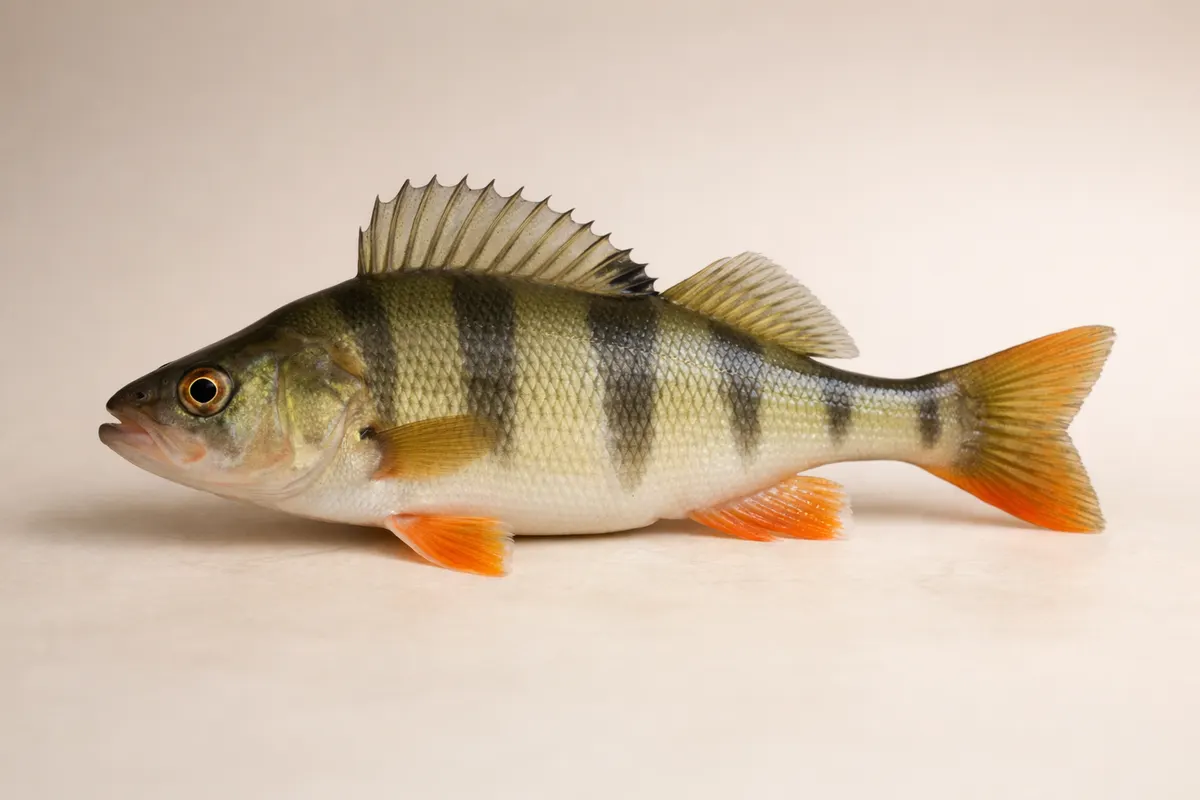
Quick answer: how to approach fish species identification
Fish species identification starts with the visible facts in the photo and the likely habitat where the fish was seen. Before naming a species, note body shape, fin arrangement, mouth position, and any clear markings; then compare those clues with where the fish was observed — reef, open water, estuary, or freshwater. Combining those visual facts with habitat reduces the candidate list quickly.
A practical first pass: record three high-confidence observations (for example: deep-bodied with a forked tail, small terminal mouth, single continuous dorsal fin with spines at the front) and one contextual detail (depth, substrate, or whether the fish was solitary or schooling). These five points often narrow the possibilities from dozens to a handful of species.
For many coastal and reef fishes, color is useful but unstable: red tones fade with depth and camera color balance alters hues. Treat color as supporting evidence, not the sole identifier. Use structural features — fin shape, scale pattern, body proportions, and teeth or mouth position — as the primary basis for identification.
If you need a quick verification after collecting these clues, the Fish Identifier tools and the site’s photo-identification pages can help as a next pass, but they should be used alongside the visual checklist and any field notes. A single photo can suggest likely species, but confidence rises with multiple viewpoints, habitat notes, or measurement references.
- Start by naming the environment (reef, mangrove, estuary, pelagic) — habitat often excludes large groups of species.
- Record body proportions: deep-bodied (e.g., angelfish), elongated (e.g., eels), or compressed (e.g., butterflyfish).
- Note fin arrangement: separate spiny and soft dorsal fins, presence of long filamentous fins, or a forked vs rounded tail.
- Save any distinct marks: bars, stripes, ocelli (eye spots), or a gaping jaw — these are high-value clues.
Fish identification guide: reading the photo and context
A fish identification guide is a practical set of checks you run on an image and the observation context to reduce uncertainty. It organizes visual cues into categories — overall shape, head and mouth details, fins, scale and skin patterns, and habitat — so you can compare a specimen against likely candidates instead of guessing from color alone.
For example, if a photograph shows a compact, laterally compressed fish with a small terminal mouth and a continuous dorsal fin running most of the back, a guide narrows that to reef families like butterflyfish or angelfish rather than pelagic jacks. Conversely, an elongated body with a tapered head and a long dorsal running the length of the back points to eels or needlefish relatives.
A well-structured guide also ranks clues by stability: fin placement and body proportions are high-stability; color and mood (whether the fish is stressed or breeding) are lower-stability. The guide should tell you which features to trust at depth, for underwater photos taken in low light, or when only one side of the fish is visible.
Use measurements when possible. Even an approximate size (for example, “about palm-length” or “roughly 30–40 cm”) helps exclude many species with similar silhouettes. If no physical measurement is possible, compare the fish to nearby objects in the frame (coral heads, known-sized species, divers’ gear) to infer scale.
- Divide clues into stable (shape, fins, mouth) and variable (color, pattern intensity, brightness).
- Compare fish silhouette to a family-level shape (deep-bodied vs elongate) before matching to species.
- Record a brief field note: depth, substrate (sand, rock, coral), behavior (hovering, schooling, bottom-feeding).
- Use at least two corroborating features (e.g., mouth position + dorsal fin shape) before assigning a likely species.
fish visual clues: the features that matter most
When no expert is immediately available, the quickest route to a likely identification is to work through a consistent set of visual clues. Start with overall body shape and proportions: is the fish taller than it is long (deep-bodied), or long and thin (elongated)? That distinction immediately points to different families and narrows candidate species.
Next, examine fin arrangement and shape. A single continuous dorsal fin with both spiny and soft sections differs from two clearly separated dorsal fins. Tail shape — forked, rounded, lunate, or truncated — indicates swimming mode and typical habitat: fast open-water fish often have deeply forked or lunate tails, while reef dwellers usually have rounded or truncate tails.
Head and mouth position are diagnostic for feeding ecology and can separate lookalikes. A superior (upturned) mouth suggests surface or midwater feeding; a terminal mouth points to midwater or generalist feeders; an inferior (downturned) mouth signals bottom-feeding behavior. Teeth visibility, barbel presence, and jaw projection can further point to families like snappers, groupers, goatfishes, or gobies.
Finally, look for special markers: blotches or ocelli near the dorsal fin, lateral lines and scale row interruptions, distinct fin filaments, and sexual or seasonal markings. Even when color is altered by depth, patterns such as stripes, spots, and unique fin tips usually remain readable in a good photo.
Use the bullets below as a quick checklist to run through every image before you try a species-level name.
- Body silhouette: deep-bodied, compressed, elongated, or globose (e.g., pufferfish).
- Dorsal fins: single continuous, two-part, spiny front then soft rear, or long ribbon-like dorsal.
- Tail shape: forked/lunate (fast swimmers) vs rounded/truncate (maneuvering reef fish).
- Mouth position: superior (upwards), terminal (front), inferior (downwards/bottom feeder).
- Distinct marks: bars, longitudinal stripes, lateral line breaks, eye spots (ocelli), or bright fin tips.
- Habitat clues visible in photo: nearby coral, sand flats, mangrove roots, or pelagic open water.
- Behavior in image: solitary, schooling tightly, hovering near substrate, or digging in sand.
Step-by-step workflow to identify a fish from a photo
Follow a repeatable workflow each time you try species identification so your results are consistent and defensible. Step 1: document the basics — where and when the photo was taken, the depth if known, and any observable behavior. These contextual notes eliminate many wrong options before you analyze the image itself.
Step 2: capture core visual metrics from the photo — approximate size, body shape category, dorsal and tail shape, mouth position, and one or two conspicuous marks (e.g., a black blotch, a row of large scales, or a filamentous fin). Write these as short bullet points to keep them actionable.
Step 3: compare those metrics against likely families rather than species. For instance, a laterally compressed fish with a small pointed snout and single continuous dorsal likely belongs to Chaetodontidae (butterflyfish) or Pomacanthidae (angelfish) in reef settings; the next step is to test specific field-guide species within that family.
Step 4: eliminate lookalikes using high-confidence differences. If two candidate species are both striped, check stripe direction (vertical vs horizontal), number of stripes, and stripe thickness; if they still match, examine secondary traits such as tail shape or eye stripe position. If confident, propose a likely species and list the features supporting that call.
Step 5: document uncertainty and next steps. If the ID is uncertain, note which evidence is missing (side profile, underside, close-up of fins). Consider asking a specialized forum, consulting a regional field guide, or running the image through the Fish Identifier tools as an optional next pass.
- Document context: location, depth, substrate, behavior, and estimated size.
- Extract 5 facts from the photo: body shape, dorsal fin type, tail shape, mouth position, and a unique mark.
- Match to family-level silhouettes, then compare candidate species for small diagnostic differences.
- Use elimination: ask which feature the candidate species do not share and rule them out.
- Record confidence level (high/medium/low) and list what additional photos or notes would confirm the ID.
Examples
Example 1 — A fork-tailed, streamlined fish schooling offshore: The silhouette and forked tail indicate a pelagic traveler such as a jack (Carangidae) or small tuna relative. Look at the profile: jacks have a more compressed body and a distinct lateral line scute region; tunas are more fusiform with a strong keel. Habitat — open water near bait schools — supports the jack/tuna grouping.
Example 2 — A laterally compressed reef fish with vertical bars and a pointed snout: Vertical bars and a pointed snout suggest butterflyfish; if you see an ocellus (false eye) near the rear dorsal, the likelihood of a Chaetodon species rises. Compare stripe count and bar width: two lookalikes can be separated by the presence of a narrow eye band or a bright anterior patch.
Example 3 — A heavy-bodied bottom fish with a large mouth and rounded tail photographed on reef rock: That silhouette favors groupers or large wrasses. Groupers typically show a chunky body and a large terminal mouth used for suction feeding; wrasses often have more elongate pectorals and visible lateral color bands, and they may show distinct sleeping coloration when captured in photos.
Example 4 — A fish with long venomous dorsal spines and zebra-like stripes often photographed near crevices: That combination immediately suggests lionfish or certain scorpionfish. Check the number and arrangement of fin spines and the presence of fleshy appendages around the head to separate lionfish (Pterois) from stonefish/scorpionfish lookalikes.
In each example, pair the visual read with habitat and behavior notes to improve accuracy. When in doubt, look for one small, high-confidence trait (e.g., a single ocellus, a distinctive jaw projection) that rules in a species or family.
- Pelagic forked-tail + schooling = think Carangidae or small tunas; check lateral line and body keels.
- Laterally compressed with vertical bars and pointed snout = likely butterflyfish; count bars and note an eye band.
- Chunky body + large mouth + reef rock = groupers; check fin shape and jaw size for confirmation.
- Zebra-like stripes + long spines + crevice = lionfish/scorpionfish group; inspect fin spine pattern and head appendages.
Limitations
Photos have unavoidable limits. Color distortion is common underwater: reds and oranges disappear at depth, and white balance can push hues toward blue or green. A live fish under stress or during breeding can display atypical colors or patterns. These factors mean color alone should not determine an identification.
Angle and perspective matter. Many diagnostic features (fin shape, mouth orientation, lateral line) are visible only in a true side profile. Oblique angles can foreshorten the body and hide distinguishing marks; top-down or partial views make species-level ID much harder. Note when the photo lacks a clean side view and downgrade your confidence accordingly.
Seasonal or regional variation adds uncertainty. Juvenile coloration and adult coloration often differ dramatically; some species have juvenile forms that mimic cleaner fish or adopt different marking patterns. Geographic variants may also alter pattern or size, so the same species can look different across its range.
When to verify with an expert: seek confirmation if the species is invasive, potentially harmful, or of regulatory interest (e.g., commercial catch legality). For conservation, fisheries, or safety decisions, treat a photo-based ID as provisional and consult a local fish biologist, fisheries office, or a vetted field guide for the region.
Bulleted guidance below separates high-confidence outcomes from partial and uncertain calls.
- High confidence: side-profile photos showing fin arrangement, mouth position, and one clear marking.
- Partial confidence: images with blurred fins or only dorsal/ventral views — you can suggest a likely family but not a species.
- Low confidence: heavily color-shifted images, small crops lacking scale, or juvenile forms — avoid firm species names.
- Verify with a regional expert for invasive species, public safety concerns, or legal/commercial questions.
Related guides
Next step: use evidence-first tools to confirm your observation
If you’ve run this checklist and want an additional pass, try the Fish Identifier resources at https://fish-identification.app/ to compare your notes and images against regional species. Treat the app and site tools as a first-pass aid after you collect habitat details and clear photos — they can suggest likely matches, but always confirm uncertain or safety-relevant IDs with a regional expert or authoritative field guide.
Take the next step →Frequently asked questions
What fish types might I see in shallow reef photos?
Shallow reef photos commonly show reef-associated families: butterflyfish and angelfish (compressed bodies, small mouths), wrasses and parrotfish (elongate to robust bodies, visible teeth or beak-like jaws in parrotfish), gobies and blennies (small benthic species often on substrate), and groupers or snappers (chunkier bodies and larger mouths). Habitat details in the photo — coral type, sand patches, or algae — help narrow the likely fish types and remove open-ocean species from consideration.
How do I tell lookalike species apart in a single photo?
Focus on structural differences you can trust: fin arrangement (single vs split dorsal), tail shape (forked vs rounded), mouth position, and any distinctive marks like ocelli or stripe direction. For example, two striped reef fish may both show bars, but one may have a continuous dorsal with spines while the other has a separated dorsal — that alone separates families. If the image lacks these features, mark your ID as tentative and list what additional views would confirm it.
Can I rely on color in underwater photos to identify a species?
Color is useful but not definitive underwater. Red and orange fade quickly with depth, and camera white balance, light angle, or post-processing can shift hues significantly. Use color as supporting evidence only after structural traits match a candidate species. If a photo is the only source, prioritize shape, fin layout, and markings that persist despite color changes.
What should I do if I need a definitive ID for conservation or safety?
For conservation, invasive-species reporting, or safety-related identifications, treat a single photo as provisional. Collect any additional images if possible (side profile, close-up of head and fins), note the exact location and depth, and consult a regional authority such as a fisheries office, university ichthyology department, or a vetted field guide. You can also document your observations and then use tools like the site’s identify pages or the Fish Identifier product as an initial triage step before contacting experts.