
Fish Identification
Channel Catfish: Identification, Habitat, and Photo Clues
A photo-friendly guide to channel catfish: what to look for, when and where they appear, how to tell similar catfish apart, and safe handling tips.
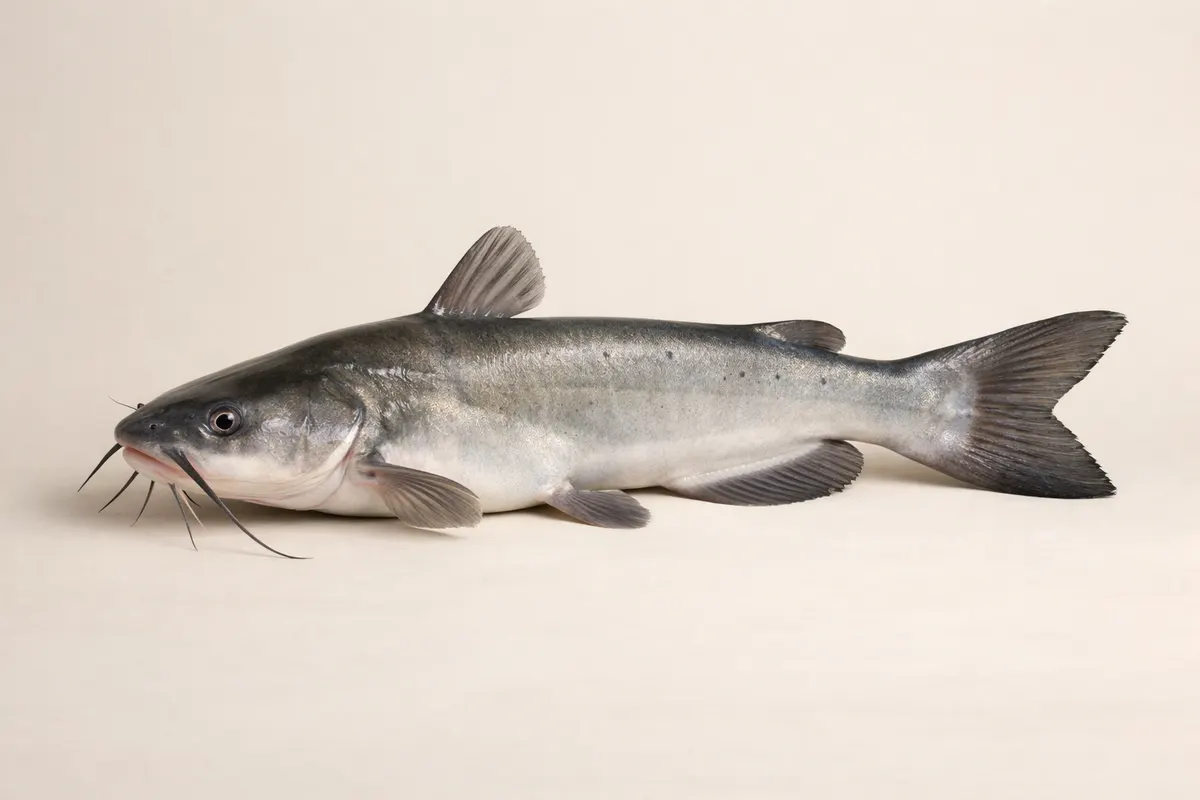
What a channel catfish is and why it matters
The channel catfish is a common North American freshwater fish in the family Ictaluridae that anglers and photographers see across rivers, lakes, and reservoirs. It’s known for its scaleless body, whisker-like barbels, and adaptable feeding behavior, which makes it one of the most frequently encountered catfish in inland waters.
Juvenile channel catfish often look different from adults: young fish typically show stronger spotting and a slimmer profile, while mature fish tend to lose distinct spots and develop a more robust belly. Seasonal changes and breeding condition can also tint body color and influence fin wear, so size and pattern should be read together rather than used alone.
For everyday identification and photo work, the channel catfish is best described by a combination of marks (spots in younger fish), a forked tail, and a rounded anal fin profile. Later sections unpack those signals and give photo-centric checks you can use on the water.
AI-generated illustration, not a verified specimen photograph. Use the linked TPWD reference for diagnostic fin-ray counts.
- Family: Ictaluridae (North American freshwater catfishes).
- Common habitats: rivers, lakes, ponds and reservoirs; tolerant of a range of water conditions.
- Appearance notes: scaleless skin, four pairs of barbels (chin and snout whiskers), often spotted when young, tail deeply forked.
How to do channel catfish identification from photos?
Good photos for identification show the head (side or three-quarter view), the anal fin, and the tail. Because color and spotting change with age and water conditions, the shape and ray counts of fins are more reliable photo clues than color alone.
Check the anal fin in clear images: channel catfish have a rounded anal fin profile. Where a precise count is possible, the channel’s anal fin typically has about 24–29 rays, which contrasts with blue catfish counts discussed below; see the authoritative reference for fish identification for these ranges.
Tail shape is often over-interpreted in casual photos. Both channel and blue catfish have deeply forked tails, so tail depth alone is not diagnostic. Use the anal fin shape and ray counts as the better photo-checkable distinction.
Barbels are important but not diagnostic between these catfish species: channel, blue, and flathead catfish each have four pairs of barbels. Look instead at head profile and mouth shape to separate flathead catfish from the forked-tail species.
- Best photo frame: head (including lower jaw), full length of anal fin, and tail fork.
- Anal fin: rounded profile for channel catfish; ray counts usually about 24–29 (see Texas Parks and Wildlife (https://tpwd.texas.gov/regulations/outdoor-annual/fishing/freshwater-fishing/catfish-identification)).
- Tail: deeply forked in both channel and blue catfish — don’t rely on tail fork alone.
- Barbels: four pairs on channel, blue, and flathead catfish — do not use barbel number as a shortcut.
Channel catfish key facts at a glance
This compact table gathers the attributes most useful when you need a quick, quotable description for field notes or a photo caption. Values are general: regional populations and individual growth will vary.
Use the table below as a checklist when reviewing photos: if several cells match your specimen, the identification is stronger; a single matching trait is rarely conclusive on its own.
| Attribute | Channel catfish (typical) | Photo clues | Why it helps |
|---|---|---|---|
| Body and skin | Scaleless, often mottled or spotted when young | Visible spots or smooth skin | Spots common in juveniles; adults may be plain |
| Anal fin | Rounded profile; typically ~24–29 rays | Rounded margin visible in clear side shots | Ray counts and shape distinguish from blue catfish (TPWD link (https://tpwd.texas.gov/regulations/outdoor-annual/fishing/freshwater-fishing/catfish-identification)) |
| Tail | Deeply forked | Fork visible behind tail base | Forked tail confirms forked-tail group but not species |
| Head and mouth | Terminal mouth, not distinctly flattened | Side-head shot shows jaw projection | Separates from flathead catfish with flattened head |
| Barbels | Four pairs of barbels | Chin and snout whiskers visible | All three common catfish species have four pairs |
- Combine multiple matching traits (anal fin shape, head profile, habitat) for higher confidence.
- When in doubt, note what is visible in your photo and treat the ID as provisional until you can check additional evidence.
Where and when you'll encounter channel catfish
Channel catfish are widespread in North American inland waters and are most common where slow or moderate currents meet structure — channel bends, submerged logs, drop-offs and deep pools. They tolerate a variety of temperatures and turbidity levels, which helps explain their broad distribution.
Seasonal behavior affects visibility: in many areas channel catfish are more actively feeding and are therefore more likely to be caught or photographed in late spring through early fall; nearshore daytime sightings increase during warm months. At other times they may rest on the bottom or in cover, making photographic encounters less frequent.
Local fishing regulations, stocking practices, and habitat alterations affect where sizable numbers occur. Always check local rules before keeping or handling fish; links below include a statewide identification reference and safe handling guidance.
| Region / habitat | When you'll see them | What you'll notice |
|---|---|---|
| Reservoirs & lakes | Spring to early fall; daytime at structure | Larger individuals near drop-offs, cover |
| Rivers & backwaters | Year-round; activity higher in warm months | Holding in pools and eddies near cover |
| Ponds & farm lakes | Warm months, sometimes all year if stocked | Smaller average size; juveniles more spotted |
| Shoreline/night | Night feeding common | Night activity may make details harder to see; do not prolong handling for a photo |
- Common settings: reservoirs, slow rivers, large ponds, backwaters and deep structure near banks.
- Activity peak: warmer months; nocturnal feeding can make night shoreline photos productive.
- Legal & local note: check state regulations before retention; treat any handling advice as a safety and legal precaution.
channel catfish vs blue catfish: photo clues
Channel and blue catfish are commonly confused because both lack scales, have whiskers (barbels), and possess deeply forked tails. Because tails are forked on both species, the anal fin is a more reliable photo difference: channel catfish typically show a rounded anal fin profile with about 24–29 rays, while blue catfish show a straighter anal fin with about 30–36 rays, according to Texas Parks and Wildlife (https://tpwd.texas.gov/regulations/outdoor-annual/fishing/freshwater-fishing/catfish-identification).
Flathead catfish are a different lookalike group. They have a broad, flattened head and a projecting lower jaw; their tail tends to be more squared or slightly notched rather than deeply forked. Do not rely on barbel counts to separate these three — channel, blue, and flathead all have four pairs of barbels.
In practice, use a clear side or three-quarter head shot plus a visible anal fin to separate channel from blue catfish. Where photo quality allows, an analyst can count anal fin rays or at least judge the fin’s rounded versus straighter outline to improve confidence.
- Blue catfish: straighter anal fin profile; higher anal fin ray count (about 30–36) — see TPWD (https://tpwd.texas.gov/regulations/outdoor-annual/fishing/freshwater-fishing/catfish-identification).
- Flathead catfish: broad flattened head, projecting lower jaw, and a squared/slightly notched tail — not fewer chin barbels.
- Tip: pair a head shot with an anal-fin view for the clearest distinction between channel and blue catfish.
Care and safe handling for channel catfish
Minimize air exposure and keep the fish supported and in the water when possible. Use wet hands or a rubberized net; avoid the eyes, gills, and barbels. Do not squeeze the belly or suspend the fish by its head. Catfish have sharp dorsal and pectoral fin spines, so avoid contact with those spines while supporting the body.
If a fish needs support before release, hold it upright facing the current so water passes through its mouth and over the gills. Do not push it backward through the water. Follow local possession and release rules, and prioritize a prompt release over obtaining extra identification photographs.
See NOAA catch-and-release guidance (https://www.fisheries.noaa.gov/national/resources-fishing/catch-and-release-fishing-best-practices) for wet handling, body support, and reduced air exposure, and Texas Parks and Wildlife release tips (https://tpwd.texas.gov/regulations/outdoor-annual/fishing/freshwater-fishing/catch-release-tips) for net and handling precautions.
- Do not hold or lift by barbels or gill covers.
- Support the fish horizontally with water flowing head to tail; avoid forcing backward flow.
- Minimize air exposure and return the fish to water promptly.
Frequently asked questions
How can I confirm channel catfish identification from a single photo?
Confirming identification from one image is often provisional. Prioritize a clear side or three-quarter head shot that includes the anal fin and tail. Look for a rounded anal fin profile (typically ~24–29 rays for channel catfish) and the terminal mouth shape; avoid relying on tail fork or barbel number alone. If possible, add a second photo showing the anal fin base and the head in profile to raise confidence.
When should I expect to see channel catfish rather than other catfish in my region?
Channel catfish are widespread in inland waters and are most frequently seen where slow currents and cover meet—river pools, reservoir structure, and deep shoreline areas. They are most active and visible in warmer months, though local stocking and habitat conditions affect timing. Use the habitat and seasonal table above to match observations to likely species.
What are the safest ways to handle a channel catfish for a quick identification photo?
Handle catfish with wet hands or a wet towel, support the body horizontally, and avoid holding by barbels or gill plates. Keep the fish upright with water flowing head to tail rather than dragging it back and forth; minimize air exposure and release promptly. These practices reduce stress and injury to the fish and follow common fish-care guidance.
Which visible differences matter most in channel catfish vs blue catfish when I only have a phone photo?
With phone photos, the anal fin is the most useful visible difference: channel catfish usually show a rounded anal fin with roughly 24–29 rays, while blue catfish have a straighter-looking anal fin with a higher ray count (about 30–36) per Texas Parks and Wildlife (https://tpwd.texas.gov/regulations/outdoor-annual/fishing/freshwater-fishing/catfish-identification). Because both species have deeply forked tails and four pairs of barbels, don’t rely on tail shape or barbel number alone.
Related guides
Check a tentative channel catfish match
Explore Fish Identifier (https://fish-identification.app/) for a photo-based identification suggestion. Check the anal-fin shape, head, and other visible features yourself; a result from an unclear image remains provisional.
Take the next step →