Sunfish Identification
Sunfish Identification: Body, Mouth, Fins and Lookalikes
Learn which visual clues matter for sunfish identification, what a photo can prove, and the safe next checks before you trust a single result.
This sunfish identification guide focuses on freshwater Lepomis, including bluegill, pumpkinseed, green sunfish, and warmouth. A clear side view can suggest candidates by showing body depth, mouth proportions, the ear flap, and fins. It cannot resolve every juvenile, hybrid, or poorly photographed fish.
Bass and crappies also belong to the sunfish family, Centrarchidae; they are not separate families to rule out. Compare the fish with regional references before narrowing it to Lepomis. This guide does not cover ocean sunfish.
Treat a photo match as a tentative identification. Fish Identifier can suggest a species or family and describe visible clues and lookalikes; the answer may remain inconclusive when important structures are hidden.

How identification works
Step 1
Snap a photo
Take a clear, well-lit photo of your item in the Fish Identifier app.
Step 2
Get an instant identification
The app reads the visible clues and returns the closest matches in seconds.
Step 3
Review the details
Compare the result with your photo, review any uncertainty, and check the suggested next steps.
Key visual signals for sunfish identification
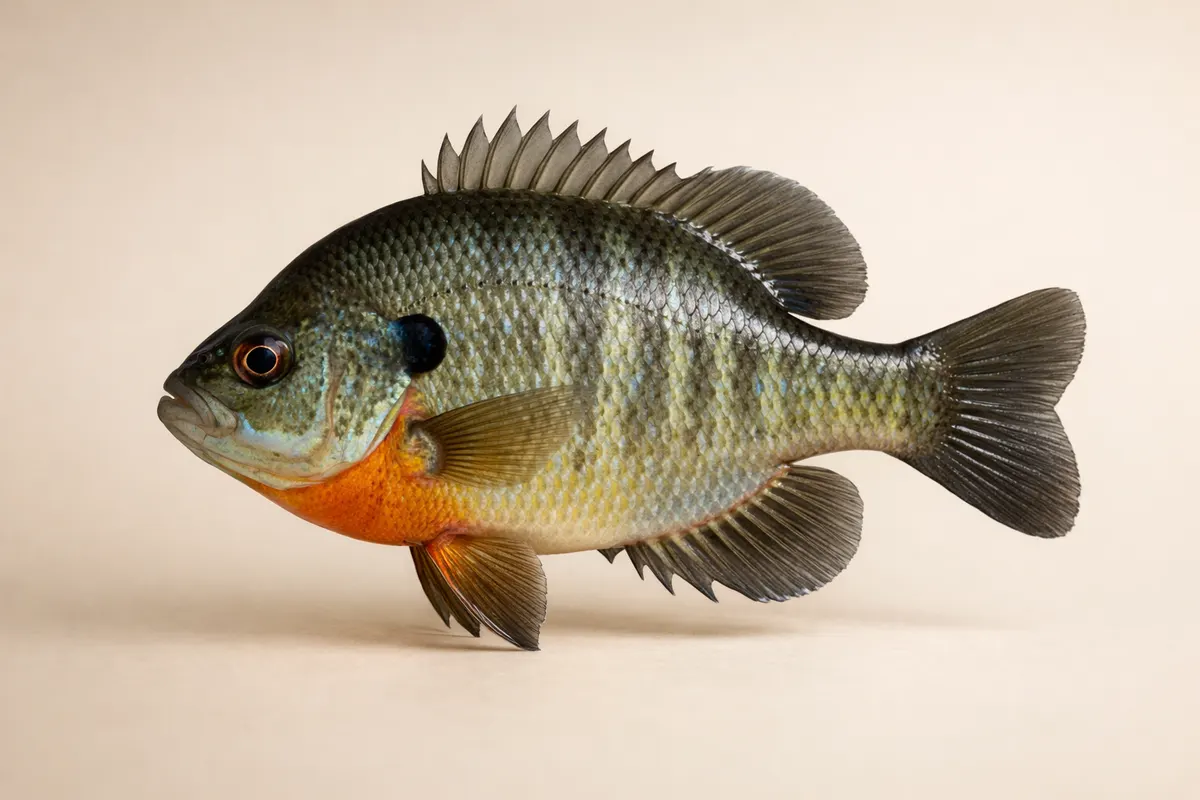
Before taking or submitting a photo, scan the fish for the high‑value signals that survive camera distortion: overall body depth, the shape and notch of the dorsal fin, presence and size of the opercular (ear) flap, mouth width relative to the eye, and flank markings or spots.
Lighting and angle change colors dramatically—especially reds and blues—so prioritize shape and fin structure in a single photo. When possible, include a side profile with the fins visible when possible and a clear view of the cheek and opercular flap.
Small but diagnostic details matter: a concave tail base, small teeth, or a longer lower jaw each shift identifications. Note that habitat (shallow weedy pond vs. clear rocky stream) is a supporting clue, not a substitute for structural features.
- Body depth and profile — sunfish are laterally compressed; the deeper-bodied specimens point to true sunfish rather than juvenile bass.
- Dorsal fin shape and notch — count spines vs. soft rays and check for a clear notch between spiny and soft portions.
- Opercular (ear) flap — size and color of the ear flap are decisive in many Lepomis.
- bluegill identification — look for a small dark opercular flap plus 6–8 vertical bars along the flank in adult males.
- Head and mouth proportions — a wider mouth and blunt head often indicate warmouth or green sunfish compared with slimmer pumpkinseeds.
What a sunfish identification result includes
A category result lists the most likely species, the visual features used to reach that ranking, and a confidence range rather than a single certainty. Expect a short rationale: for example, “Candidate: Bluegill — ear flap present, vertical bars noted; confidence 70%.”
The result also recommends specific follow-up shots or measurements that reduce ambiguity: a close-up of the opercular flap, a ventral shot for mouth shape, or an in-water photo showing habitat. Results link to example pages and similar records so you can compare real examples.
We include contextual fields that help you check plausibility: estimated total length from scale in the photo, likely habitat match (pond, stream, reservoir), and common lookalikes flagged for the candidate.
- Ranked species candidates with a short evidence summary for each.
- Confidence band (low/medium/high) and which features drove that score.
- Suggested next photos or measurements to confirm a candidate.
- Estimated size from reference objects and a habitat plausibility note.
- Links to example records, including the Bluegill: Identification, Habitat, and Real Examples page and a short guide on identifying from photos.
Species sunfish are commonly mistaken for
Sunfish are often confused with other panfish and juvenile bass. The key to separating them in a photo is to compare fin counts, the ear flap, and mouth proportions rather than color alone. For example, crappies have more elongate bodies and larger mouths relative to eye size.
Within Lepomis, the common confusions are between pumpkinseed, warmouth, green sunfish, and juveniles of other species. A single misaligned photo can make a deep-bodied pumpkinseed look like a green sunfish if the cheek and ear flap aren’t visible.
If a result flags a close lookalike, take the recommended second shot—typically a head-on cheek shot and a clear side view with the dorsal fin placed flat—to resolve the difference.
- Pumpkinseed vs. bluegill: pumpkinseed often has a bright orange margin on the opercular flap and more irregular spots on the flank.
- Green sunfish vs. bluegill: green sunfish have larger mouths and a thicker, stockier head profile in photos.
- Warmouth vs. small bass: warmouth retains sunfish‑type ear flap but has a broader mouth and mottled chin—noticeable in close-up head shots.
Frequently asked questions
Pumpkinseed sunfish identification: How can I tell a pumpkinseed from similar panfish in my photo?
A pumpkinseed typically shows a bright orange or red edge on the opercular flap, a compact deep body, and irregular dark spots on the flank. If your photo captures the head and flank pattern, look for the small pointed snout and the distinct opercular margin; those features separate pumpkinseed from bluegill and green sunfish. If the photo lacks a clear head view, request a close-up of the cheek and ear flap before relying on a single candidate.
Green sunfish identification: What photo clues confirm a green sunfish rather than another Lepomis?
Green sunfish tend to have a relatively large mouth, a less deep body than bluegill, and blue-green markings on the head. Compare multiple features in a clear side view and check a regional guide. Juveniles, hybrids, and poor photos can remain uncertain.
Warmouth identification: Which head features should I compare?
Look for a large mouth and several dark reddish-brown streaks radiating back from the eye. Compare these with body and fin features in a regional field guide. Head markings alone are insufficient for a firm identification, particularly in an unclear photograph.
How reliable is a single photo for sunfish identification when I'm checking a catch?
A clear photograph can support a candidate, but juveniles, hybrids, missing location, or hidden fins can prevent a species-level answer. Compare the visible features with a regional field guide; keep an uncertain result tentative.
Related guides
Try Fish Identifier on your sunfish photo
After comparing the visible features, upload a clear existing photo at https://fish-identification.app/tools/freshwater-fish-identifier for a possible species or family and follow-up checks. Keep location notes for independent confirmation. A photo result does not establish whether a fish may legally be kept or is safe to eat.