
Fish Identification
Pumpkinseed: Identification, Habitat, and Real Examples
Learn how to recognize pumpkinseed fish from photos, where and when you'll find them, and the visible clues that separate them from similar sunfish.
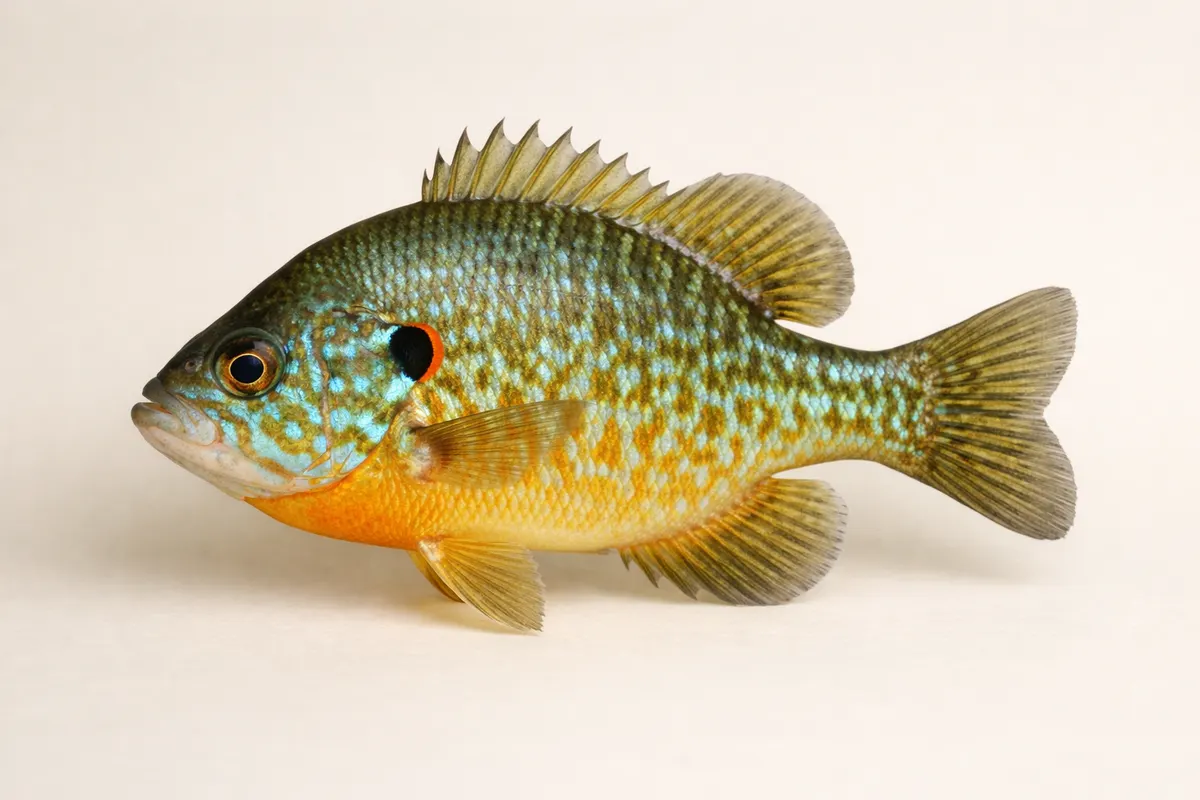
What is the pumpkinseed fish?
The pumpkinseed fish is a small freshwater sunfish (Lepomis gibbosus) commonly found across eastern North America and in introduced pockets elsewhere. Adults usually measure 6–10 cm (2.5–4 in) in common angling populations, though large individuals can reach about 15 cm. It belongs to the Centrarchidae family, the same group that includes bluegill and largemouth bass, and is known for its bright, ornate coloration and laterally compressed body.
This sunfish is notable for a rounded, somewhat deep body with a short, blunt snout and a moderately sized mouth. Its behavior—frequenting vegetated shallows and pursuing small invertebrates or insect larvae—makes it an early-season sight in calm, warm waters. Photographs that capture body shape, fin placement, and the opercular (gill) flap area give the most reliable clues for identification.
Because the pumpkinseed is small and colorful, it is frequently photographed by anglers and pond-watchers. Color in photos can shift with water conditions, light, and camera settings, so proportion and fin details often carry more weight than exact hue when identifying the species from an image.
- Family: Centrarchidae (sunfishes).
- Typical adult length: 6–10 cm (2.5–4 in); maximum commonly ~15 cm.
- Notable for bright mottled colors, compressed body, and distinct opercular flap markings.
- Habitat preference: weedy shallows, ponds, slow lakes and sluggish streams.
pumpkinseed sunfish identification: photo clues
A single photo can support a confident pumpkinseed fish ID if it shows a few photo-checkable signals together: body shape (deep and laterally compressed), the opercular flap with its colored margin, the dorsal and pectoral fin shapes, and the pattern of spots or bars on the flanks. Look first for the species' characteristic combination of a short snout, broad body, and a rounded dorsal profile.
The opercular flap (the small flap at the rear edge of the gill cover) is a key diagnostic area. Pumpkinseeds commonly show a bright orange to red spot or crescent at the edge of the opercular flap and a dark margin—if visible, this is a strong cue. Also check for iridescent blue or green streaking on the cheek and throat region; these crescent-shaped blue marks are frequent on pumpkinseeds and stand out in good photos.
Fin shape and placement matter: pumpkinseeds have a single continuous dorsal fin with a spiny front portion and softer rear portion; the dorsal profile is relatively tall. Pectoral fins are pointed and reach toward the pelvic area. When color is washed out (underwater photos or low light), the fish’s proportions—short head relative to body depth—and the short mouth become the decisive features.
Always note photo quality and context. A cropped, blurry, or angle-distorted image can hide key marks; multiple angles increase confidence. Avoid declaring certainty from a single, low-resolution picture—state the evidence you see and what’s missing.
- Opercular flap: orange/red crescent or spot with a dark edge (highly suggestive).
- Body shape: deep, laterally compressed profile and short snout.
- Color pattern: mottled sides with orange, green, and iridescent blue streaks.
- Dorsal fin: single, with spiny anterior and softer posterior sections.
- Mouth: small to moderately sized; does not extend far past eye.
Pumpkinseed fish — key facts
A compact table below summarizes the attributes most useful for quick visual checks and field notes. Use it as a checklist when you inspect photos: if three or more attributes match, the identification is likely correct, though a second opinion is still valuable for ambiguous images.
| Attribute | Typical | Notes |
|---|---|---|
| Adult size | 6–10 cm (commonly) | Occasional individuals to ~15 cm; size varies by habitat. |
| Coloring | Orange, green, blue highlights | Highly variable; iridescent blue streaks on cheek common. |
| Habitat | Weedy ponds, lakes, slow streams | Prefers shallow, vegetated margins. |
| Active season | Late spring to early fall | Most visible in warm months near vegetation. |
| Distinguishing feature | Opercular flap spot & body shape | Red/orange spot on gill cover edge plus deep body. |
Where and when you'll encounter pumpkinseed fish
Pumpkinseeds are most common in the northeastern and midwestern United States and adjacent parts of Canada; they have been introduced to parts of western North America and Europe. They concentrate in shallow, slow-moving waters with plenty of submerged vegetation or leaf litter where they forage for insects, snails, and small crustaceans.
Seasonal activity peaks in late spring through summer when water temperatures rise and the fish move into the shallows to feed and spawn. Early morning and late afternoon are often the best photographic windows because light is softer and the fish may be more active near the surface.
When looking through photos, expect to find pumpkinseeds near weed beds, fallen logs, rock edges, and the margins of ponds and lakes. Boat wakes or turbid water can distort colors; focus on body proportions, fin placement, and the opercular flap when such conditions are present.
| Region / Habitat | When you'll see it | What you'll notice |
|---|---|---|
| Northeastern lakes & ponds | Spring–Summer | Brightly colored adults near weedlines and logs |
| Midwestern farm ponds | Late spring–early fall | Small shoals near shallow vegetation |
| Introduced European waters | Summer months | Localized populations in sheltered bays |
| Slow streams/backwaters | Warm season | Individuals near submerged roots and rock |
- Best photo locations: vegetated pond margins, shallow lake bays, slow backwaters.
- Peak visibility: late spring to early fall; mornings and evenings are productive.
- Behavior to photograph: feeding near plants, guarding nests (males), or hovering near structure.
Commonly confused with pumpkinseed fish
Pumpkinseeds are most often mistaken for other sunfishes, especially bluegill and green sunfish. Photo checks that focus on opercular flap markings, cheek streaking, and body depth usually separate these species. When the opercular flap spot and cheek iridescence are visible, pumpkinseed is the likelier match.
Bluegill (Lepomis macrochirus) is the primary lookalike; both share a deep body and similar size range. However, bluegills typically have a darker, plain opercular flap and vertical bars on the sides, while pumpkinseeds show a colorful opercular margin and more mottled, spotty flank patterns. For a deeper comparison, see our Bluegill: Identification, Habitat, and Real Examples page at https://fish-identification.app/wiki/bluegill.
Green sunfish and rock bass can be confused at a glance but tend to have larger mouths and different head profiles. Green sunfish often have thicker, more angular jaws and a broader head; rock bass are stockier with a different eye and mouth placement. Evaluate mouth size and head angle in photos to rule them out.
- Bluegill: darker opercular flap, vertical flank bars; pumpkinseed has red/orange opercular spot.
- Green sunfish: broader head and bigger mouth than pumpkinseed.
- Rock bass: stockier body and different eye placement; less iridescent cheek streaking.
Care and handling for pumpkinseed fish
If you catch a pumpkinseed and plan to release it, handle it gently to minimize stress: wet your hands before contact, avoid holding the fish out of water for longer than necessary to photograph, and support its body rather than squeezing the abdomen. Use barbless hooks or debarb single hooks to ease removal and reduce injury.
Observe local regulations about possession and bag limits—this guide does not provide legal advice and rules vary by state and country. Do not assume every waterbody allows collection or transfer of pumpkinseeds; if you suspect regulations apply, consult your local fish and wildlife authority before removing fish from their habitat.
For hobbyists considering a small pond or planted aquarium, pumpkinseeds are hardy but territorial; they need adequate space and vegetation and can outcompete some species. Capturing care details from multiple observations and local sources will produce the safest husbandry plan.
- Release tips: wet hands, quick photos, support body, remove hooks carefully.
- Legal note: check local possession and transfer rules before collecting or moving fish.
- Aquarium/pond note: territorial; provide space and vegetation if keeping temporarily.
Frequently asked questions
Pumpkinseed vs bluegill: How can I tell which sunfish I photographed in my pond?
Compare the opercular flap and flank pattern in your photo. Pumpkinseeds often show an orange or red spot at the edge of the gill cover and iridescent blue cheek streaks, plus a more mottled, spotty flank. Bluegills usually have a darker, plain opercular flap and clearer vertical bars on the sides. Also check mouth length and head shape—bluegills often have a slightly longer mouth and less pronounced cheek iridescence.
Can I identify a pumpkinseed fish from a single mobile phone photo?
Yes sometimes, but depend on the image. A clear photo that shows body shape, the opercular flap area, and fin outlines can be sufficient. If color is distorted by water or lighting, use proportions (deep body, short snout) and fin placement to support the ID. When the photo lacks these features—blurry, extreme angle, or poor lighting—treat the identification as tentative and seek additional images or a second opinion.
Where are pumpkinseed fish most commonly introduced outside their native range?
Pumpkinseeds have been introduced in parts of western North America and several European countries. They establish best in sheltered, vegetated ponds and slow-moving waters. Introductions often occur through accidental transfer with bait or intentional stocking; local ecology and water temperature determine whether they persist. If you find one in an unexpected location, note habitat and report sightings to local fisheries if asked.
What should I do if I find a pumpkinseed that looks sick or injured?
If you encounter a visibly sick or injured pumpkinseed, minimize handling and try to photograph the symptoms for documentation. Avoid moving the fish between waters, and follow local wildlife reporting procedures if disease is suspected. For minor injuries from hooks, remove the hook gently if safe to do so and release the fish quickly; consult local fish and wildlife resources for guidance on diseased fish and appropriate reporting channels.
Related guides
Compare your photo to these pumpkinseed clues
If you want a second check, use Fish Identifier to compare your photo against the visual clues described on this page. Treat the tool as an additional evidence check after you confirm opercular flap, body shape, and fin features in your images. Visit https://fish-identification.app/tools/fish-identifier to try a photo comparison; remember that a second angle or higher-resolution image will always increase confidence.
Take the next step →