
Fish Identification
Red Snapper: How to Identify, Where It Lives, and Lookalikes
Learn how to identify red snapper from photos, where and when you're likely to see it, and the common lookalikes to check before you conclude.
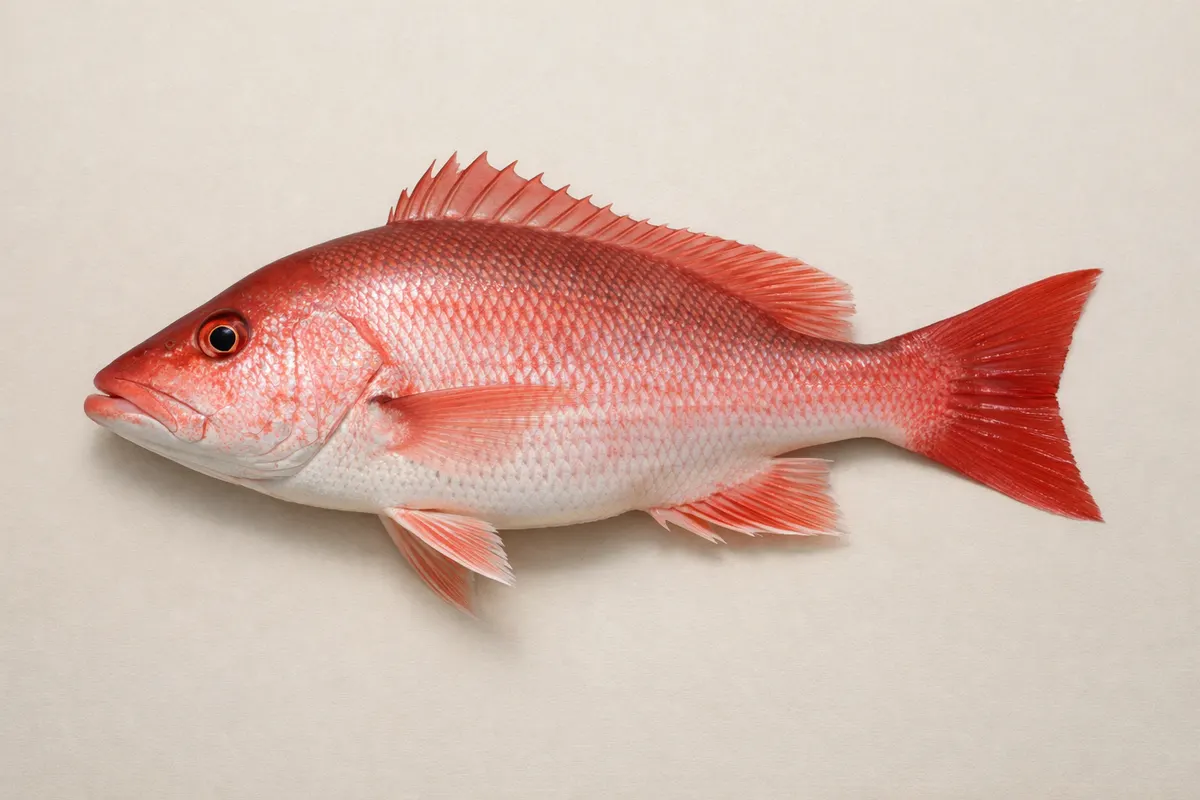
What a red snapper is and where it fits
The red snapper is a medium- to large-sized marine fish in the Lutjanidae family, commonly recognized for its reddish body and triangular profile. Adults typically measure between 40 and 90 cm (16–35 inches) total length, with larger individuals found on deeper offshore structure.
Red snapper are reef-associated predators: they spend much of their life around wrecks, rocky ledges, and offshore hard-bottom habitat where they feed on smaller fish, crustaceans, and cephalopods. Their body is laterally compressed with a pointed snout and a continuous dorsal fin with a slight notch.
Geographically, what is called “red snapper” in the western Atlantic (Lutjanus campechanus) ranges from the Gulf of Mexico up the southeastern United States coast. Other Lutjanus species in the Caribbean and Atlantic can look similar; context such as region and depth is important when identifying a specimen.
This species is known both for recreational fishing importance and for being confused with several similar red-coloured reef fishes. Always treat a single photo as one piece of evidence and combine visible clues with location and season before drawing a conclusion.
red snapper identification: visual clues to check
Good red snapper identification depends on a set of visible, photo-checkable characters rather than any single mark. Look first at overall body color, head shape, eye size and placement, fin shape, and the pattern of any spots or streaks.
The head is often key: red snapper have a slightly pointed snout and a mouth that reaches at least to a vertical under the eye in adults. The eye is relatively large and can appear bright red; however, lighting and camera white balance can shift tones, so focus on shape and relative proportions as well as color.
Fin and scale details can confirm or rule out the species in many photos. The dorsal fin of a red snapper is continuous with a shallow notch and the posterior soft rays are not dramatically elongated. Pectoral fins are moderately long and the tail (caudal fin) is forked but not extremely so.
Juveniles and some regional variants may be paler or show small dark spotting along the back. When using photos, include a measure of size (ruler, known object) and a shot of both the head and lateral profile: these views capture the most diagnostic information.
Checklist bullets to use when reviewing a photo:
- Body color: uniform reddish to pinkish, darkest along the back; abrupt orange or yellow patches are uncommon.
- Head and snout: pointed snout with mouth extending to or past the middle of the eye in larger fish.
- Eye: relatively large and positioned high on the head; color may appear red in good lighting.
- Dorsal and tail fins: continuous dorsal fin with shallow notch; tail moderately forked, not deeply lunate.
- Scale and spotted pattern: usually few or no spots on adults; small juveniles sometimes show faint spotting.
Key facts
Use this compact table for rapid checks when you have a candidate photo. These are typical values and regional variation exists; treat them as diagnostic guides rather than rules.
If a photo matches most rows below and matches the location and depth you expect, the probability of correct identification increases. If several rows mismatch, consider lookalikes or request more images showing head and fins.
| Attribute | Typical value | Where to check in a photo | Notes |
|---|---|---|---|
| Adult size | 40–90 cm (16–35 in) | Full-body lateral shot or size reference | Larger specimens common offshore |
| Color | Reddish to pinkish | Lateral body and dorsal surface | Lighting can shift tones toward orange |
| Head shape | Pointed snout, large eye | Close-up of head | Mouth reaches to or past eye in adults |
| Dorsal fin | Continuous with shallow notch | Profile showing top of fish | Not elongated filament-like rays |
| Habitat | Reefs, wrecks, hard bottom | Background or reported capture location | Often in 10–200 m depths depending on region |
Where and when you’ll encounter red snapper
Knowing typical range and habitats narrows the field quickly. In the western Atlantic and Gulf of Mexico, red snapper are most often encountered on offshore reefs, near wrecks, and around artificial structures from shallow reefs down to deeper ledges.
Seasonal movements and fishing pressure influence when people observe red snapper. In many regions, adult fish concentrate near structure year-round but are more frequently seen by anglers from spring through fall; juveniles are often in shallower nearshore or patch-reef habitat.
When evaluating a photo, pair the visible habitat cues with reported location and depth. A red-bodied fish photographed on a muddy estuary bottom or in a freshwater lake is unlikely to be a red snapper and more likely a different species adapted to those habitats.
The table below summarizes typical encounter scenarios that photographers and fishers report most often.
| Region / Habitat | When you'll see it | What you'll notice | Typical depth range |
|---|---|---|---|
| Gulf of Mexico, offshore reefs | Year-round; peak sighting spring–fall | Large red-bodied adults around structure | 20–150 m |
| Southeastern U.S. Atlantic shelf | Warmer months more active nearshore | Adults on wrecks and ledges; juveniles shallower | 15–100 m |
| Caribbean (similar Lutjanus species) | Dependent on local species seasonality | Red-colored lutjanids common, confirm by head shape | 10–80 m |
| Nearshore patch reefs | Juveniles and subadults more frequent | Smaller, paler individuals; sometimes spotted | 5–30 m |
| Unusual inland or estuarine shots | Rare and likely misidentification | Look for freshwater-tolerant lookalikes instead | Shallow |
Species commonly confused with red snapper
Several red or reddish reef fishes can be mistaken for red snapper in photos. The most frequent lookalikes are vermilion snapper, certain small-groupers, and juvenile versions of other Lutjanus species. Photographic clues—head angle, mouth length, fin shape, and scale pattern—usually separate them.
For example, vermilion snapper (Rhomboplites aurorubens) is smaller and has a more slender body and finer, denser spotting in many individuals. The eye-to-mouth proportion and a more rounded snout are differences visible in good head-closeups.
When a photo is ambiguous, request or take additional views: top-down lighting to show dorsal fin shape, a clear head shot for mouth reach, and a close lateral shot to show body depth. These views catch the tell-tale differences that a single, angled phone photo often misses.
- Vermilion snapper: smaller size, slimmer body, finer spotting—check the snout and eye-to-mouth distance.
- Small groupers (rock cods): bulkier body, wider head and thicker lips; check mouth shape and body depth.
- Other Lutjanus (regional species): compare fin notch and tail shape; local checklists help rule in/out similar species.
- If habitat is freshwater or estuarine, consider non-snapper species adapted to those conditions rather than red snapper.
Care and handling
If you catch or encounter a red snapper, minimize handling time and avoid lifting the fish by the gills. Use wet hands or a wet cloth to support the body if you need to photograph it, and keep the fish horizontal to protect internal organs.
Follow local fisheries regulations and size limits: legal protections and seasons vary by state and country. If you plan to release a fish, use appropriate gear (circle hooks, de-barbed hooks) and revive larger fish near the water column before letting them swim away.
For photographed specimens, note the location, depth, and time of day in your image metadata or notes—these contextual details help later verification and are useful for reporting observations without implying legal or market value.
Frequently asked questions
How do I tell red snapper vs vermilion snapper in a single phone photo?
Compare body proportions and head details: vermilion snapper are usually smaller with a more slender profile and may show dense fine spotting. In contrast, true red snapper typically have a thicker body, a more pointed snout, and a mouth that reaches to or past the eye in adults. A close-up of the head and a clear lateral shot that includes the tail will show the relative snout length, mouth position, and fin shapes you need to differentiate them. If the photo lacks these views, treat the ID as tentative and gather more images or location/depth info.
What photographic angles give the best evidence for red snapper identification?
A straight lateral profile that shows the full body length, a close-up of the head (eye, snout, and mouth), and a shot from above or at a slight dorsal angle that shows the dorsal fin shape are the most diagnostic. Include a size reference if possible. These angles reveal the snout shape, mouth reach, dorsal notch, and tail form that separate red snapper from lookalikes.
Can I rely on color alone to identify a red snapper from a photo?
No—color alone is unreliable because underwater lighting, camera white balance, and post-processing can alter hues. Use color as a supporting clue but prioritize structural features: head shape, mouth reach, fin configuration, and body proportions. Combine visual clues with location and depth to increase confidence.
Are there legal or safety checks I should consider when identifying a suspected red snapper?
Yes. Fisheries regulations, bag limits, and seasons differ widely by jurisdiction; identification does not replace checking current local rules before keeping or reporting a catch. For safety, never assume edibility or market condition from a photo alone—confirm species and follow handling guidance, and consult local authorities or fisheries resources if you believe a protected or regulated specimen is involved.
Related guides
Compare your photo to these red snapper clues
After you've checked head shape, fin profile, and habitat against the clues above, consider using Fish Identifier as an additional first-pass comparison tool. It can highlight the same photo-checkable features and show likely matches based on visual patterns. Use it alongside the checklist here and, if needed, collect clearer head and lateral shots plus location and depth to improve any identification.
Take the next step →