Fish Identification
Smallmouth Bass: Identification, Habitat, and Real Examples
Learn how to recognize smallmouth bass from photos, where and when they appear, and which visible clues help you distinguish them from lookalikes.
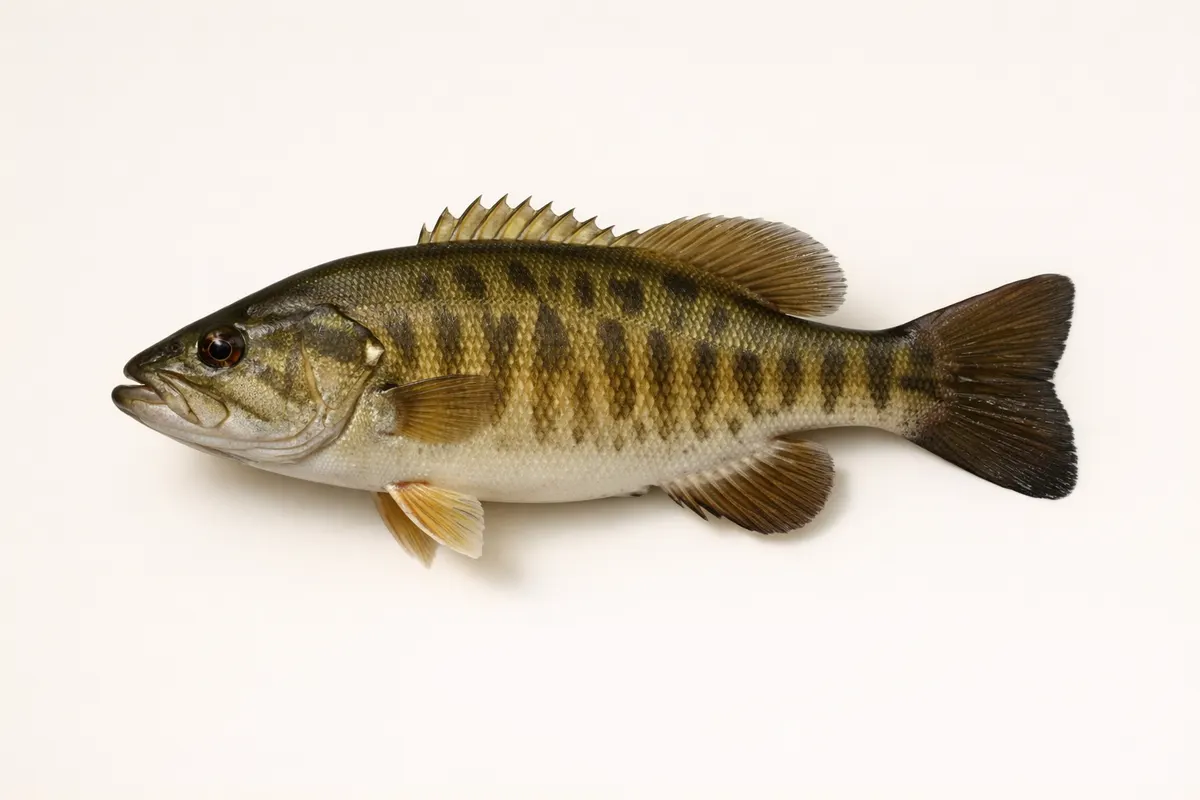
What is the smallmouth bass and where it fits in freshwater fish
The smallmouth bass (Micropterus dolomieu) is a North American freshwater black bass known for its bronzy to olive body, vertical bars on the sides, and a mouth that reaches only to about the middle of the eye. Adult fish typically run 25–50 cm (10–20 inches), though size varies with waterbody productivity and age.
Belonging to the sunfish family (Centrarchidae), smallmouth bass are prized by anglers for their fighting behavior and tendency to live in clearer, rockier water than some other bass species. In photos, their compact head profile and the separation between the dorsal fins are often reliable context clues.
Field context matters: the fish’s color can shift with water clarity, substrate, and health. A bronzy flank with distinct vertical bars and a relatively small jaw in a rocky river or clear lake is a common real-world combination that strengthens an identification, but no single trait proves the species alone.
How can you tell a smallmouth bass from a photo?
Photographic identification rests on consistent, visible features. For smallmouth bass, start with head and mouth shape, flank pattern, and dorsal-fin outline. These features are often visible in common phone photos and are less likely to change with lighting than overall body color.
Next, check context: the substrate, presence of rocks or gravel, and whether the fish was photographed in clear water can support or weaken the ID. Juveniles and heavy-inked specimens may look different; always weigh multiple clues together.
Finally, assess photo quality — scale, angle, and whether the mouth is open all affect perceived proportions. A side-profile shot at eye level is the most diagnostic; oblique, foreshortened, or top-down photos hide jaw length and flank bars.
- Head and mouth: jaw reaches about to the middle of the eye — shorter than largemouth; look for a compact snout.
- Flank pattern: 6–12 faint to distinct vertical bars from gill plate to tail, usually contrasting with a bronzy or olive background.
- Dorsal fins: two-part dorsal with the spiny and soft portions connected and only a shallow notch; soft dorsal rays roughly equal height.
- Tail shape: slightly forked to straight-edged with no extreme lobes; check caudal peduncle thickness in side shots.
- Eye and iris: eyes often have a golden or reddish cast in clear-water specimens, especially in good lighting.
- Scale texture and lateral line: scales appear relatively even with a continuous lateral line; look for a smooth, regular scale pattern in close-up shots.
Key facts
Use this compact facts table as a checklist when you compare an unknown fish photo to smallmouth bass characteristics. The right-hand column lists the specific photo cues to inspect; combine several cues before you commit to an identification.
Remember that size and color ranges overlap with other centrarchids, so rely on structural features (jaw length, dorsal shape, flank bars) and habitat context as primary evidence.
| Attribute | Typical value | Photo-check cues |
|---|---|---|
| Adult length | 10–20 in (25–50 cm) | Measure visually against hand, ruler, lure, or known object in photo |
| Body color | Bronze/olive to brown | Bronze flank with darker vertical bands; not uniformly green |
| Flank pattern | 6–12 vertical bars | Look for vertical striping from gill plate toward tail |
| Mouth size | Jaw reaches to middle of eye | Lower jaw does not extend past rear of eye |
| Dorsal fins | Connected spiny and soft dorsal | Shallow notch between spiny and soft sections; profile fairly even |
| Preferred habitat | Clear rivers, rocky lakes | Visible rocks, gravel, or current in background |
Where and when you’re most likely to see smallmouth bass
Smallmouth bass occur across much of eastern and central North America and have been introduced in suitable waters elsewhere. They favor clearer, cooler waters with rock, gravel, or firm substrates rather than silty or heavily vegetated flats. Time of day and season influence visibility and behavior in photos.
When judging a photo, habitat cues in the background — rocky shoreline, current, submerged ledges, or clear lake bottoms — add weight to an ID. Seasonal color shifts, spawning behavior, and feeding locations also affect where anglers are likely to encounter them.
| Region / habitat | When you'll see it | What you'll notice |
|---|---|---|
| Rocky rivers and riffles | Spring–fall, especially during daylight feeding | Clear water, rock/pebble substrate, fish hugging structure |
| Clear, rocky lakes | Spring and fall feeding; summer deeper near structure | Fish near drop-offs, points, and submerged rock |
| Reservoirs with rock benches | Year-round but depth varies seasonally | Isolated schools near structure; water clarity varies |
| Cool tributaries and streams | Spring and early summer when water is cooler | Smaller, more streamlined specimens; visible current cues |
Commonly confused with
Smallmouth bass are most often mistaken for largemouth bass and several sunfish species. Below are the most frequent confusions and the quick photo checks that help separate them.
When uncertain, compare jaw length, flank pattern, and habitat. For example, a fish photographed in thick weedy shallows with a very large jaw is more likely largemouth. If the background shows rocky, clear water and the jaw is shorter, smallmouth is more probable.
When you need detailed comparisons, consult the separate pages for species like largemouth bass and bluegill for additional photos and regional notes.
- smallmouth vs largemouth: focus on jaw length and mouth position relative to the eye; largemouth’s jaw extends past the eye, smallmouth’s does not.
- Largemouth bass — tell by a horizontal dark stripe along the flank and a larger mouth; check whether the lower jaw passes the eye.
- Bluegill and sunfish — smaller, rounder bodies with a distinct opercular flap; look for a compressed, deep body and vertical banding that stops short of the tail.
- Walleye (in some color phases) — longer, more streamlined body and different eye reflectance; walleye have a larger, more toothy mouth and different dorsal fin profiles.
Care and handling tips for photographed smallmouth bass
If your photo documents a live fish you intend to release, handle it as little as possible and with wet hands or a wet towel to protect the slime coat. Minimize air exposure — aim for under 30–60 seconds out of water for photos — and support the fish horizontally, not by the jaw alone.
Respect local fishing regulations: size and bag limits, seasonal closures, and protected waters vary by region. If you’re unsure, check local fish and wildlife agency resources before keeping or transporting specimens.
When a reader shares an image for identification, avoid claiming absolute certainty from one photo: present probable ID and the top missing clues (angle, scale, ventral view) a verifier would need for confirmation.
Frequently asked questions
Smallmouth bass identification: Can I identify one from a blurry phone photo?
You can sometimes make a probable call from a blurry photo if multiple structural clues are visible — jaw length relative to the eye, vertical flank bars, and a connected dorsal with a shallow notch. However, blur often hides proportions and subtle patterns; if the jaw margin or flank bars are unclear, treat the ID as tentative and note which additional shots (side profile, close-up of the head, context showing substrate) would confirm it.
How long do smallmouth bass typically live in lakes and rivers?
Smallmouth bass commonly live 6–12 years in natural populations; some individuals reach older ages in productive lakes with good habitat. Lifespan depends on fishing pressure, habitat quality, and predation; photos of large, thick-bodied specimens in prime habitat are often older fish, but size alone does not prove age without scale or otolith analysis.
Can I assume a fish is a smallmouth from color alone?
No—color alone is unreliable because water clarity, light angle, and fish stress all change appearance. Use structural traits (jaw reach, vertical bars, dorsal shape) and habitat clues in combination with color. For example, a brownish fish with vertical bars in clear, rocky water points toward smallmouth, but the same brown in muddy water could be a different species.
Are there legal limits or safety steps I should follow when handling smallmouth bass?
Yes. Always follow local size and bag limits and any seasonal closures; those rules vary by state and province. For safety and conservation, use barbless hooks for easy release, keep the fish wet and supported, and avoid handling during extreme temperatures. If keeping a specimen for study, document location and conditions and verify legal requirements first.
Related guides
Compare your photo against these smallmouth bass clues
Use the Fish Identifier mobile app to compare your photo side-by-side with the photo-checkable traits listed here. Start by uploading or scanning a clear side-profile and capture a close-up of the mouth and flank bars. Treat the app’s result as a first-pass; follow up with additional shots and local regulations for verification and safe handling.