Fish Mouth Types: Feeding Clues and Species Hints
A practical guide to fish mouth types: which photographic clues hold up, which are misleading, and safe next steps to improve identification.
Quick answer: what fish mouth types reveal
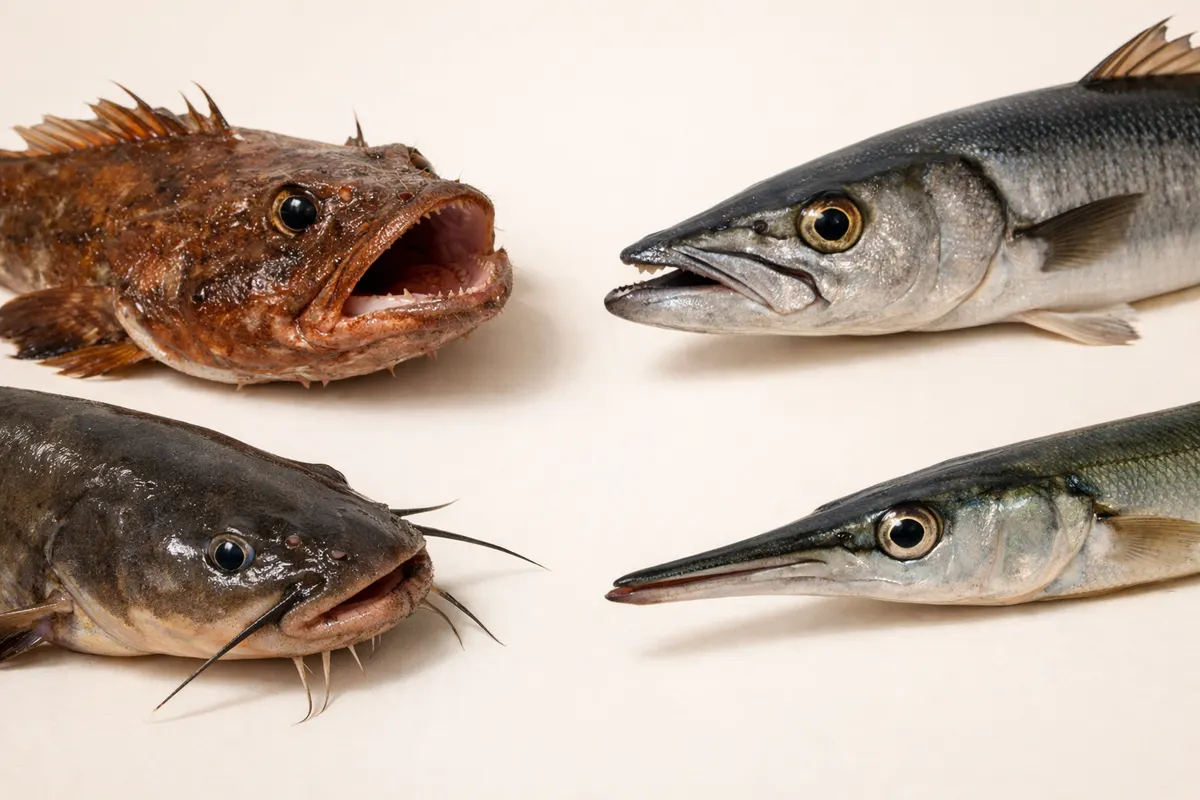
Fish mouth types give high-value clues about feeding behavior and offer useful hints toward families or functional groups, but they rarely prove a species by themselves. Photo-friendly traits like mouth position (terminal, superior, inferior), jaw length, visible teeth, and presence of barbels often survive normal phone lighting and can separate broad groups—ambush predators, bottom feeders, surface feeders, or suction feeders.
Use mouth clues as a narrowing tool. For example, a long toothed snout and many visible teeth point toward pike or gar relatives; a ventral mouth with fleshy lips and barbels suggests carp, catfish, or other bottom-foraging fishes. A large, forward-facing gape often indicates a fish that swallows prey whole, such as bass or some sunfish.
At the same time, expect overlap. Juveniles, breeding colors, injuries, or the fish’s posture while handled change apparent shape. Treat a mouth-based match as a best-guess: combine it with fin shape, body profile, habitat, and local range before you label a specimen as a species.
- Mouth position helps sort feeding style: superior (surface), terminal (midwater), inferior (bottom).
- Jaw length and gape size indicate prey size and capture method rather than precise species.
- Visible teeth, snout shape, and barbels provide stronger signals when paired with habitat or fin clues.
Strong visual clues from fish mouth types
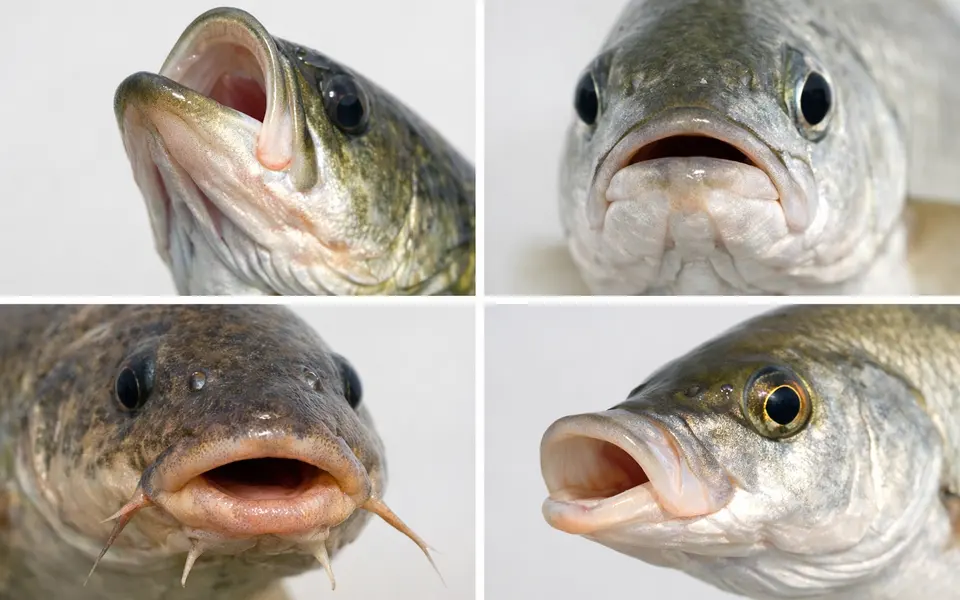
Some mouth details are resilient in casual photos and consistently useful for identification. Start with mouth position relative to the head: a mouth pointing upward (superior) often signals surface feeding, a forward-facing mouth (terminal) suits midwater generalists, and a downward-facing mouth (inferior) is typical of bottom feeders. These positions are straightforward to observe from a side or three-quarter photo.
Jaw architecture is also durable. A pronounced underbite or overbite, a very long jaw extending past the eye, or a slender tubular snout are reliable physical shapes. For instance, a long narrow snout with needle-like teeth strongly suggests gar or needlefish relatives; a blunt, protractile jaw with a round gape is more typical of many sunfishes and cichlids.
Teeth visibility carries useful information when they show in photos. Conspicuous canine-like teeth along the jaw margin point to piscivores or ambush predators; many small conical teeth or a toothless-looking mouth usually indicates suction feeding on invertebrates or plankton. Barbels—whisker-like sensory appendages—are a distinct strong clue for catfish, some carp, and certain tropical bottom-dwellers.
Relative mouth size compared to the head helps too. A very large gape that occupies much of the head suggests a predator that swallows large prey (bass, pike), whereas a small, narrow mouth aligns with species that pick small items or graze. When possible, photograph the head with a common object for scale—this preserves the relative proportions in the image and makes the mouth-size clue actionable.
- Mouth position: superior, terminal, inferior—easy to spot and tied to feeding niche.
- Jaw length and snout shape: long tubular snouts vs. short broad jaws give strong functional hints.
- Visible teeth: conspicuous canines vs. small conical or absent teeth indicate different feeding methods.
- Barbels and fleshy lips: unmistakable signals for bottom feeders like catfish or carp.
- Gape proportion: large gape suggests big-prey predators; small mouth suggests micro-feeding.
Weak or misleading clues to avoid over-weighting
Certain mouth-related details look important but are often misleading in single photos. Coloration around the lips or inside the mouth is a common trap: red or orange tones may reflect lighting, blood, or breeding condition rather than a species-specific pigment. Similarly, gloss or iridescence from wet skin and glare can create the illusion of scales or markings that aren’t diagnostic.
Angle and posture matter. A fish held with its head tipped up or down can temporarily make a terminal mouth appear superior or inferior. Mouths often open when a fish is stressed—an open gape can exaggerate perceived jaw length or mask lip shape. Juveniles and adults can look different enough that juvenile mouth shapes should not be treated as adult confirmation.
Hands-on handling, freezing, or preservation changes soft tissues. Lipped mouths may retract when the fish is out of water, and barbels can cling to a wet hand or be pressed against the body, hiding them. Lastly, many unrelated species evolve similar mouth forms to exploit the same food (convergent evolution): a sucker-like mouth appears in several unrelated bottom-feeding groups, so siding on a lookalike without habitat or regional range checks invites misidentification.
- Color inside the mouth is often unreliable due to lighting, blood, or breeding changes.
- One photo angle can hide or distort mouth position—capture multiple views when possible.
- Juvenile vs. adult shapes may differ substantially; don’t assume juvenile mouth = adult species.
- Handling and preservation can change soft tissues (lips, barbels), so treat those cues cautiously.
- Convergent mouth shapes occur across unrelated families; combine with other clues.
How to compare mouth clues with other details
Comparing likely matches works best when you create a short checklist and eliminate groups step by step. Start with the most robust, photographically stable clues: mouth position and jaw shape. Once you group the specimen into surface, midwater, or bottom-feeding functional categories, add dentition, barbels, and gape proportion to narrow to families or genera.
Next, include habitat context and geographic range. A ventral sucker mouth photographed in a Rocky Mountain stream has a different species likelihood than the same mouth shape photographed in a tropical estuary. Use location, substrate (mud, sand, vegetation), and water type (freshwater, brackish, salt) as decisive tiebreakers for lookalikes.
Finally, cross-check fin shapes and scale patterns. Some species share mouth form but differ in dorsal fin placement or tail shape—those differences often provide the final confirmation step. If you remain unsure, record your hypotheses and their supporting clues: this keeps the reasoning transparent when you consult experts or a verification app.
| Clue | What it suggests | Reliability (photo) | Example species hints |
|---|---|---|---|
| Mouth position (superior/terminal/inferior) | Feeding niche (surface/midwater/bottom) | High | Surface feeders: topminnows; bottom feeders: carp |
| Jaw length and snout shape | Prey type and capture method | High | Long snout + teeth: gar; short broad jaw: sunfish |
| Visible teeth type | Carnivore vs suction feeder | Medium | Canine teeth: pike; small conical: many perch-like species |
| Barbels or fleshy lips | Benthic foraging | High | Barbels: catfish, some carp |
| Gape proportion | Relative prey size capability | Medium | Large gape: bass; small mouth: minnows |
| Associated habitat | Regional plausibility | Very high | Saltwater surf zones vs inland streams |
- Sort by mouth position first, then add jaw length and teeth visibility.
- Use habitat and geographic range as primary tiebreakers for lookalike mouth forms.
- Finish by comparing fin positions, scale patterns, and body profile for confirmation.
- Keep a brief note of each clue and confidence level to make later verification easier.
Using an app after you gather mouth clues
After you’ve collected clear photos and noted mouth clues, use an identification app like Fish Identifier as a first-pass tool to prioritize likely matches. Before you run the scan, add short context notes: location, habitat (river, lake, estuary), and behavior observed (surface feeding, bottom rooting). These context points dramatically improve match quality and should accompany any images in your phone’s gallery.
When photographing for an app or expert check, capture at least three views: a lateral shot showing mouth position, a close-up of the head and mouth to reveal teeth or barbels, and a dorsal or ventral shot to preserve body proportion. If you can safely include the substrate or vegetation nearby, that gives helpful habitat context. Avoid instructing the app to use site uploads; run scans within the app and treat automated IDs as suggestions, not definitive labels.
If the app returns multiple plausible species, compare them using the checklist from the comparison workflow. Look up range maps and known local records for each candidate. If you suspect an invasive species or a conservation concern, follow local reporting steps and consult regional resources—our guide on invasive fish species has practical reporting and safety steps (https://fish-identification.app/blog/invasive-fish-species).
Finally, treat app results as research notes. Record the highest-confidence clues that led to the top match so you can revisit the ID later or share the supporting photos and notes with a local expert or fisheries agency for confirmation.
- Take 3+ views: lateral, head/mouth close-up, and a view showing body proportion.
- Tell the app the location and habitat—context improves outcomes.
- Use app matches as hypotheses; confirm with range checks and fin/scale comparisons.
- If you suspect invasive species, follow local reporting steps and consult authorities.
Related guides
Use Fish Identifier as a first-pass after checking mouth clues
After you photograph mouth position, jaw shape, and close-up head details, run a scan in the Fish Identifier app with the location and habitat noted. Treat the app’s match as a helpful hypothesis—combine it with fin, body, and range checks before you label a specimen. If you suspect an invasive or protected species, follow official local reporting procedures and share your photos and notes with fisheries professionals for confirmation.

Frequently asked questions
Can I identify a fish species from its mouth alone?
A mouth alone rarely proves species identity. Mouth features can narrow possibilities to functional groups or families (for example, catfish-like barbels or gar-style long snouts), but lookalike species and life-stage changes make single-clue IDs unreliable. Combine mouth clues with fin shape, body proportions, habitat, and geographic range to make a more defensible identification.
What are the easiest mouth features to photograph for identification?
Photograph mouth position and jaw profile in a clear lateral or three-quarter view, take a close-up of the head to show teeth and barbels, and include a second shot from above or below to capture relative mouth placement. Add a short note of location and habitat; these contextual details often resolve ambiguity.
How do I tell if a mouth is terminal, superior, or inferior in a photo?
Assess the mouth angle relative to the horizontal axis of the head. A terminal mouth aligns roughly with the middle of the head and points forward; a superior mouth tilts upward toward the top of the head, and an inferior mouth angles downward under the snout. Use the eye and dorsal fin base as reference points if posture makes the angle ambiguous.
If an app gives multiple matches, how should I decide which is most likely?
Treat app outputs as ranked hypotheses. Cross-check each match against your checklist: does the mouth position, jaw shape, and visible teeth align? Does the candidate’s known habitat and regional range fit your photograph’s location? Then compare fin placement and scale or pattern differences. If uncertainty remains, save the photos and the app’s top suggestions as research notes and consult a local expert or fisheries agency before making definitive claims.