Fish Scale Patterns: Texture, Color, and Lateral Line Clues
Understand fish scale patterns: which photo clues reliably narrow species, which are misleading, and how to verify matches with context and the app.
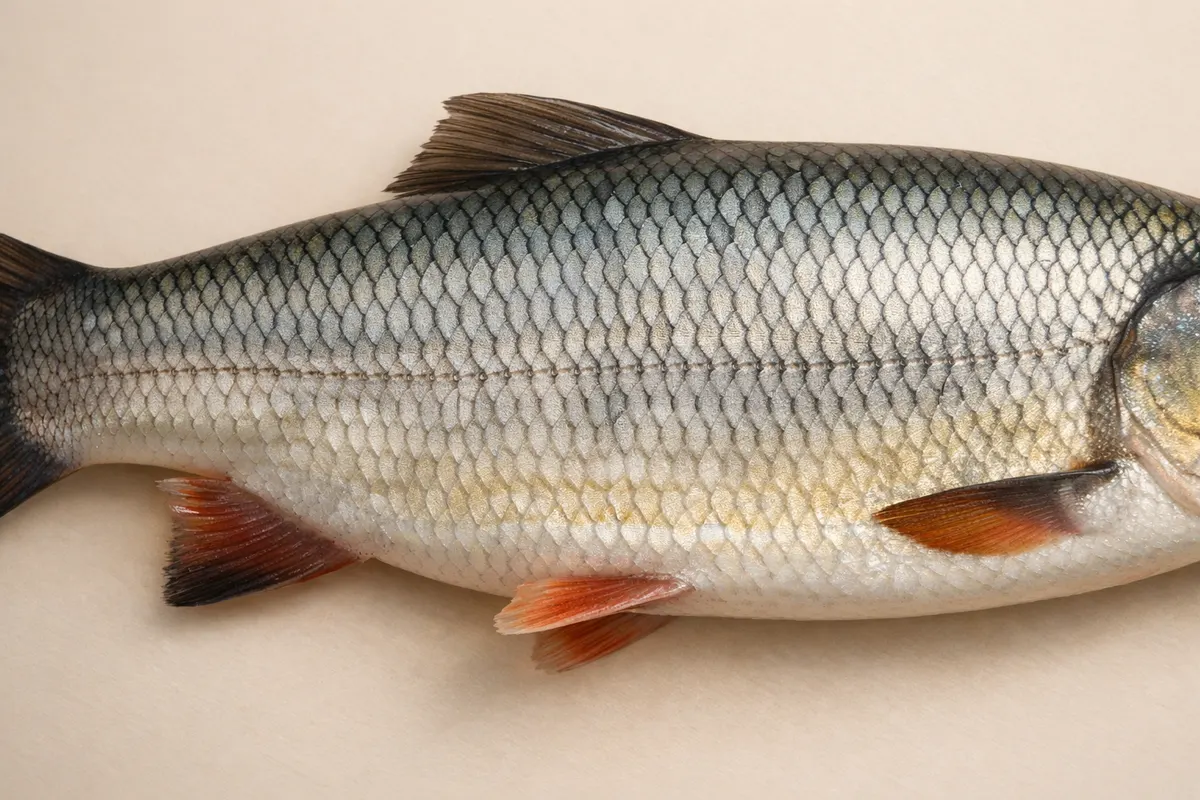
Quick answer: what fish scale patterns tell you
Fish scale patterns can narrow possibilities quickly, but they rarely prove a species on their own. In photos, the most reliable information from scales is scale type (cycloid, ctenoid, ganoid, placoid), the presence and position of a lateral line, and repeatable textural features like keels or raised ridges. These cues hold up best across lighting and minor blur.
Use scale clues as evidence that suggests or rules out groups. For example, diamond-shaped ganoid scales point strongly to gars or bichirs, while placoid denticles indicate sharks and rays. Ctenoid vs cycloid scale texture distinguishes many bony fishes such as perches and carp, but it does not identify species by itself.
A practical rule: combine scale evidence with habitat, body shape, fin placement, and a note about size or age before naming a fish. If the photo shows a single convincing feature—say, a lateral line interrupted at the tail—treat it as a helpful lead rather than a final ID.
- Scale type and texture are the strongest single-photo clues for grouping fish.
- Lateral line shape and continuity often separate lookalikes more reliably than color.
- Color and sheen are useful but changeable—use them only with structural clues.
- Always pair scale clues with habitat, size, and fin or head details before a tentative match.
Strongest fish scale pattern clues to trust
Start with scale type. Cycloid scales are smooth and rounded, common in salmonids and carps; ctenoid scales have tiny posterior comb-like teeth and are typical of perciforms (perches, basses). Ganoid scales are hard, enamel-like and overlap as diamonds on gars and sturgeons; placoid scales are tiny tooth-like denticles on sharks and rays. Scale type is often visible at modest crop sizes if you zoom into the flank or flank near the dorsal fin.
Look for structural texture: keels, ridges, tubercles, or spiny projections along the scales. Keels along the lateral line or tail peduncle are stable identifiers for fast-swimming species. Raised tubercles or small bumps on individual scales can indicate breeding condition or specific genera (some sculpins and wrasses show these). These surface details survive changes in lighting better than subtle hue variations.
The lateral line itself is a high-value clue. Note whether it's continuous, interrupted, raised, or marked by a series of pores or spots. In many families the lateral line shifts position or breaks across the flank; that pattern can separate species that otherwise share similar scale texture. When visible, count or estimate the number of scale rows above and below the lateral line if possible; counts are diagnostic in many field guides.
Scale size and overlap pattern are useful when you can compare to body proportions. Large, widely spaced scales (e.g., carp) are different from small, tightly overlapping scales (e.g., many minnows). Juveniles sometimes show different spacing, so always pair size-based observations with an estimated total length or a reference object in the photo.
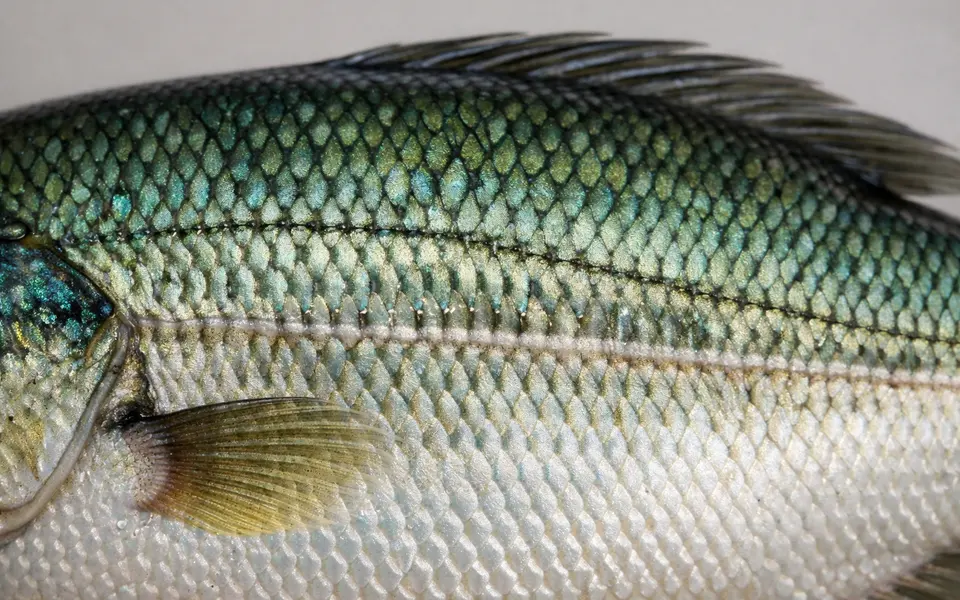
- Scale type (cycloid, ctenoid, ganoid, placoid) — excellent for grouping.
- Lateral line continuity, interruption, and pore pattern — very diagnostic.
- Keels, tubercles, and raised ridges — stable texture clues.
- Scale size and overlap pattern relative to body shape — supports matches.
- Scale row counts above/below the lateral line — useful when visible.
Fish scale patterns that often mislead
Color is the most common weak signal. Hue and saturation vary with light angle, camera white balance, water clarity, and the fish’s stress or breeding state. Many species have iridescent sheens that flash different colors depending on the viewing angle. Relying on color alone leads to frequent misidentifications—two different species can look nearly identical under the same light, and the same species can appear dramatically different in another photo.
Glare, partial coverage, and wear create false impressions. A wet fish photographed in bright sun will have specular highlights that obscure scale edges; algae, mud, or abrasion can hide scale texture. Scales that look rough in a single, low-resolution image might actually be smoothed by abrasion or tank conditions. Conversely, shadows and noise can make smooth cycloid scales appear toothed.
One-angle photos and juvenile plumage are common traps. Juveniles often carry different patterns—spots, stripes, or blotches—that disappear or shift in adults. Flatfish and species that change sides (e.g., flounder) can show different scale orientation depending on how they’re resting. Likewise, an oblique close-up of the flank can exaggerate scale spacing or make the lateral line appear interrupted when it isn’t.
Generic body shape or 'typical' patterns are deceptive. Many unrelated species converge on similar banding, spots, or countershading for camouflage. Lookalike pairs—such as two small sunfishes or two young sculpins—often require a combination of traits (scale edges, fin ray counts, head scale pattern) to distinguish them. Treat any single decorative pattern as only one piece of the puzzle.
- Color and iridescence change with angle and light—weak by themselves.
- Glare, dirt, or damage mask scale edges and produce false texture.
- Single-angle and juvenile patterns often misrepresent adult appearance.
- General banding or spots are common across unrelated species—combine clues.
Compare scale patterns: a step-by-step workflow
A disciplined comparison workflow reduces guesswork. Start by assembling every available image or observation: flank close-up (for scales), head shot (mouth and operculum), lateral view (body shape and lateral line), and an environmental note (freshwater/saltwater, substrate, and approximate water depth or shoreline). Even a rough habitat note eliminates many coastal-only or inland-only possibilities.
Next, create a short checklist of high-priority traits from the strong clues: scale type, lateral line pattern, keels or tubercles, and scale size. Work through candidate species one trait at a time: if the photo clearly shows ctenoid scales, rule out groups that lack comb-like posterior edges. If the lateral line is interrupted in the tail region, drop species whose lateral line is continuous.
Use side-by-side visual comparison rather than name-first searching. Compare the photo to reference images that show the same angle and similar lighting if possible; look for matching scale overlap, the same lateral line position relative to fins, and identical texture features. Avoid deciding based on color match alone—prioritize structure and placement.
When candidates remain close, add secondary checks: fin ray counts visible in a threshold-quality photo, head scale pattern or operculum spines, and proportion cues (head length vs body length). If the fish is from an area with known ranges, overlay distribution information as a sanity check. Keep a short note about confidence level—'likely genus,' 'possible species,' or 'needs specimen or expert confirmation.'
- Assemble photos and habitat/context notes before comparing.
- Filter candidates by scale type and lateral line first.
- Compare structural features side-by-side in similar views.
- Use secondary checks (fin rays, head scales, proportions) to narrow further.
- Record your confidence and which clues support or contradict the match.
Using Fish Identifier after checking scale clues
Use a dedicated app like Fish Identifier as a next step, not a shortcut. After you’ve run the checklist above, open the app and treat its suggestions as candidate leads to cross-check rather than final answers. Enter contextual notes—location, habitat (rocky shore, muddy river, reef), and any size information—so the app’s suggestions reflect your clues.
When the app returns matches, compare them against your checklist. Does the suggested species match the scale type, lateral line pattern, and texture you observed? Reject any result that conflicts with a clear structural clue even if color seems to match. Keep notes on which suggestions align and which don’t; this habit helps you learn characteristic mismatches for lookalike groups over time.
If results are ambiguous, use the app’s images as reference material when you perform the side-by-side visual comparison described earlier. Look for the same scale overlap, the same lateral line position, and consistent texture details in the app’s sample photos. If you still can’t resolve the ID, treat the app’s output as research notes and consider submitting the case to an expert or a local identification forum with your checklist and photos.
Protect expectations: a single photo rarely proves a species. Use the app to accelerate narrowing, and always be explicit about confidence when you share or record an identification—label borderline cases as probable or tentative rather than definitive.
- Run the app after you complete your visible-clue checklist.
- Add habitat, size, and time notes to improve candidate relevance.
- Cross-check app matches against structural clues first, color second.
- Treat ambiguous matches as research notes; seek expert confirmation if needed.
- Always record your confidence level and why you accepted or rejected a match.
Related guides
Try Fish Identifier after your scale-check checklist
Finished checking scale type, lateral line, texture, and habitat notes? Use the Fish Identifier app on your phone as a practical next step. Treat the app’s suggestions as candidate leads—compare each match to the structural clues you observed, note conflicts, and mark confidence levels. If an ID matters for safety, legality, or conservation, follow up with local experts or specimen-based verification rather than relying on a single photo.

Frequently asked questions
Can I tell species from scale counts in a single photo?
Scale counts are diagnostic in many keys, but counting reliably from a single photo is often difficult. You need a clear lateral view with the flank fully visible and no distortion from perspective. If the photo shows the entire lateral line and overlapping scales with minimal blur, you can sometimes estimate rows above and below the lateral line. Treat any count from a photo as provisional and note uncertainty—a formal count from a specimen or calibrated image is more reliable.
How can I photograph scales to capture useful clues?
Take at least three views: a close-up of the flank at mid-body for scale type, a full lateral shot showing the lateral line and fin positions, and a head-on or oblique shot to show operculum and mouth shape. Use diffuse light (open shade or an overcast sky) to reduce glare, keep the camera parallel to the flank to avoid foreshortening, and include a small scale bar or object of known length for size reference. Multiple angles reduce reliance on any single misleading detail.
Do juveniles have different scale patterns than adults?
Yes—juveniles often display spots, bands, or different contrast that disappear as they mature. Some species go through several pattern stages before reaching adult coloration. This means a juvenile’s scale appearance can suggest a different group than the adult. When age is uncertain, prioritize structural clues like scale type and lateral line over decorative juvenile markings.
Is lateral line visibility affected by water or photo quality?
Absolutely. Water turbidity, surface reflections, and camera noise can obscure the lateral line or create false interruptions. The lateral line may be visible as a pigmented groove, a series of pores, or a raised keel; these appear differently depending on angle and lighting. If the lateral line is unclear, gather additional pictures or note the habitat and behavior—some species have subtle lines only visible under ideal conditions.