Saltwater Fish Identification: Color, Body Shape, and Fin Clues
Learn which visible clues matter for saltwater fish identification, how to weigh conflicting signs, and the safe next steps to confirm an ID.
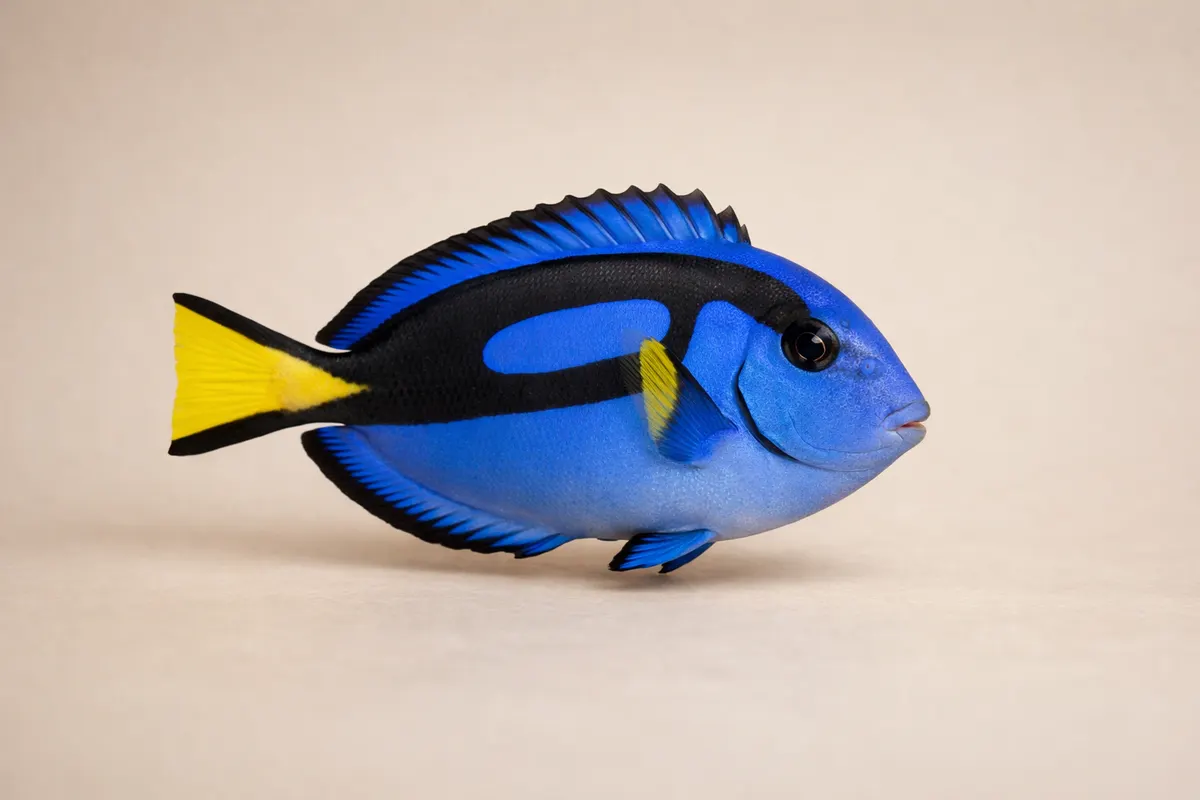
Quick answer for saltwater fish identification
Saltwater fish identification from a photo is strongest when you combine stable structural clues—body shape, fin arrangement, and tail profile—with basic context like location and size. These features survive common photo problems (color shifts, glare, compression) better than headline colors or faint markings.
Body proportions and fin counts narrow groups quickly: a long, torpedo-shaped fish is likely a fast pelagic species; a deep, laterally compressed body usually signals reef species. Tail shape (forked, rounded, lunate) and the number and placement of dorsal and anal fins often exclude large families before you consider color.
Treat color and temporary marks as supporting evidence rather than proof. Use those strong clues to generate a short list of likely families or genera, then cross-check habitat, depth, and behavior. If you want a practical next step, take multiple photos (side profile, head close-up, tail) and note where and when you saw the fish—those simple steps multiply the diagnostic power of any app or field guide.
Stable visual clues that carry the most weight
Start with the fish’s overall silhouette. The broad categories—elongate (needlelike or torpedo), deep/compressed (oval or disk-shaped), fusiform (streamlined but not extreme), and ribbonlike—limit possibilities quickly because body plan reflects lifestyle. For example, cruising predators and schooling pelagics share streamlined profiles, while reef browsers and maneuverable species are often deeper and laterally compressed.
Next, check fin architecture. Count and note the placement of true dorsal fins, whether the dorsal is spiny then soft-rayed, and whether the tail (caudal fin) is forked, emarginate, rounded, or lunate. Many families have diagnostic fin patterns: surgeonfishes have a continuous dorsal with a distinctive scalpel near the tail base; many wrasses have a long dorsal with a break between spiny and soft rays.
Look for head and mouth features. Mouth orientation (terminal, subterminal, superior), teeth visibility (fangs, nipping teeth, beak-like plates), and the presence of barbels or protruding jaws are informative. These traits relate directly to feeding habits and are more consistent than color across lighting conditions and after capture.
Surface texture and large-scale features—visible scale size, presence of scutes or keel along the midline, and a clearly visible lateral line—help at higher taxonomic resolution. Rough thick scales or bony plates suggest certain groups (some boxfishes, triggerfish), while very small cycloid scales point to others (many pelagic species). When visible, the lateral line’s shape and interruption points are a useful fingerprint.
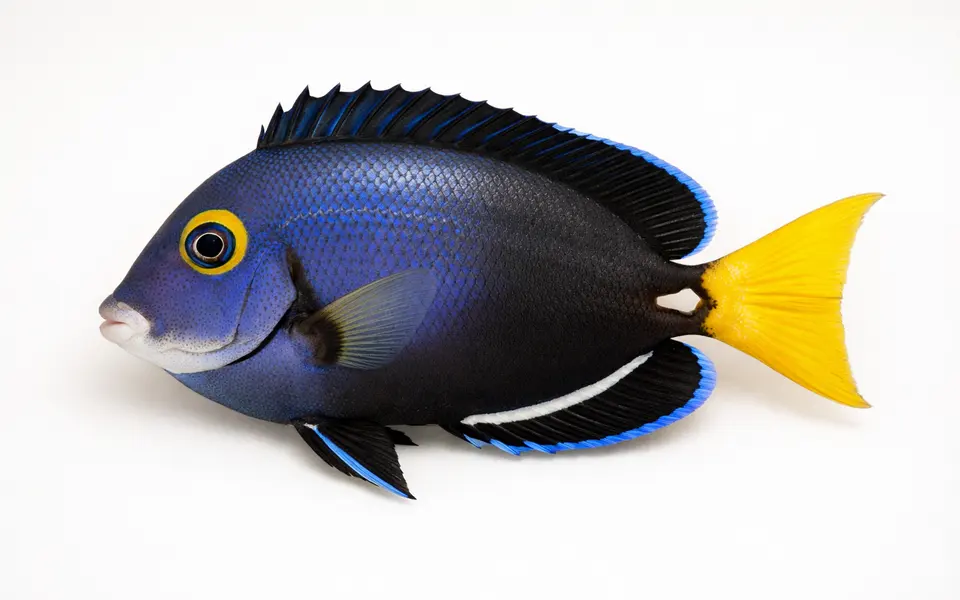
- Silhouette (body depth vs. length): quickly separates reef vs. pelagic forms.
- Tail shape (forked, rounded, lunate): indicates swimming style and family groups.
- Dorsal/anal fin count and placement: often diagnostic for families.
- Mouth position and teeth type: direct clue to feeding niche and species group.
- Scale texture and lateral line pattern: higher-resolution identifiers when visible.
- Distinctive anatomical structures: barbels, spines, or keels narrow options fast.
Weak signals
Color is the most tempting but least reliable single clue. Lighting, water color, camera white balance, and the fish’s stress level can drastically change hues. Some reef species flash neon colors that wash out in camera phones; others darken or lose iridescence after capture. Use color as a corroborating detail—not your primary decision point.
Small marks and spots are often context-dependent. A temporary bruise, parasite, or algae patch can mimic species-specific spots. Juveniles may sport bold patterns that vanish in adults, and some species change patterns seasonally or during spawning. If a unique spot or band is the only evidence, treat the ID as provisional.
Angle and foreshortening create false proportions. A fish held at a steep angle to the lens will appear deeper or shorter than it is; photographed head-on, the body silhouette becomes ambiguous. Similarly, zoom and cropping can hide diagnostic fin bases or tail shape. Always seek a true side profile for structural clues.
Over-reliance on a single photo amplifies every weak signal. Combine several images taken from different angles and distances before committing to a species-level identification.
- Color alone: liable to change with light, camera, or fish stress.
- Juvenile vs adult patterns: can be misleading without size context.
- Reflections, glare, and shadows: often look like spots or stripes.
- Single-angle photos: risk misreading body proportions and fin bases.
Comparison workflow
Work from broad to narrow. First apply exclusion rules using geography and habitat: where (region, reef, open ocean), depth range, and the observed behavior (schooling, hovering, bottom-probing) will eliminate many unrelated groups. Next compare silhouette and fin formula—these are robust and reduce your candidate list significantly.
Once you have a short list of plausible families or genera, use combined traits to distinguish lookalikes. For example, two reef fish with similar stripes might still differ in tail shape, dorsal fin count, or mouth angle. Create a quick matrix: family/genus vs. the five strongest clues (body shape, tail, dorsal/anal fin pattern, mouth, and a unique anatomical feature). Favor matches that align on at least three structural clues.
When structural clues still leave ambiguity, bring in secondary evidence: color pattern (as supporting), typical size at that life stage, and whether the observed behavior or microhabitat matches common species accounts. If juveniles of one species mimic another, prioritize anatomical details like scale type, gill cover shape, or the presence of a spine or barbed plate.
Document the comparison process. Save the images, note the location and time, and list the clues that support and contradict each candidate. That log turns an uncertain photo into a reproducible research note you or others can revisit; it’s also what experienced identifiers want to see when you ask for help.
- Filter by location and habitat first to remove impossible matches.
- Match silhouette and fin pattern before color or markings.
- Use a 3-of-5 structural-clue threshold to prefer one candidate over another.
- Record supporting and contradicting clues for later review or expert help.
After checking clues: how to use an ID app effectively
Treat any app suggestion as a prioritized hypothesis, not a confirmed ID. After you’ve taken the recommended photos (true lateral profile, head close-up showing mouth, clear shot of the tail) and noted where and when you saw the fish, run those images through an app as a first pass. The app’s best outcome is a short ranked list that you can test against your checklist of structural clues.
When an app suggests a species that conflicts with clear structural clues, trust the structural evidence first. For example, if the app returns a species known for a lunate tail but the photo shows a rounded caudal fin, that mismatch is a red flag. Use the app’s suggestions to focus which field guide pages or search terms you should consult next.
Use app outputs to collect vernacular names and high-quality reference images, then cross-check with authoritative region-specific resources. If you want a single internal reference before diving deeper, our guide What Type of Fish Is This: Visual Clues, Lookalikes, and Safe Next Steps covers how to move from app suggestions to final verification and which habitat or collection records to consult.
If uncertainty remains after cross-checking, share your photos and your comparison notes with a forum or local expert, and request that they highlight the specific clues they rely on. Don’t paste a photo without your notes: the best help comes from others who can see the same structural clues you used and compare them against known species.
- Take multiple, labeled photos: side profile, head, tail, and any distinctive marks.
- Note location, depth, time of day, and estimated size next to the photos.
- Compare the app’s top suggestions to your 3-of-5 structural-clue checklist.
- Use app results to find authoritative images and regional IDs, then verify.
Related guides
Check the clues, then try Fish Identifier
After you photograph the fish and note the location, size, and behavior, use Fish Identifier on your phone as a practical next step. Treat the app’s suggestions as research leads—compare them to the strong clues (shape, fin pattern, tail, mouth) and record which traits match and which don’t. If a result is uncertain, save your comparison notes and share them with an expert or local community for confirmation. Fish Identifier works best as a rapid, evidence-driven helper after you collect the right photos.

Frequently asked questions
Can color alone identify a saltwater fish?
No. Color is useful but unreliable by itself. Light, water clarity, camera white balance, and a fish’s stress or reproductive state can all alter color. Use color to support structural clues—like body shape, fin placement, or tail form—rather than as the deciding factor. If color is the only match, treat the identification as provisional and gather additional evidence such as a lateral profile and notes about where you saw the fish.
What photos should I take to maximize identification accuracy?
Take at least three photos: a true side profile (full body), a close-up of the head and mouth, and a clear shot of the tail. Add a top-down or oblique shot if you can, and include an object for scale (hand, ruler, or known-length item). Note the location, depth or tide condition, and time of day. Multiple angles reveal fin bases, scale texture, and mouth orientation—details that often distinguish lookalikes.
How reliable are fin counts and mouth shape when viewed in phone photos?
Fin counts and mouth shape are among the more reliable clues in phone photos because they are structural, not color-dependent. They can be obscured by angle or motion blur, so aim for a lateral shot that shows the full dorsal and anal fin length and the head in profile for mouth position. If the photo is sharp and the fin bases are visible, these features should be weighted heavily in your comparison workflow.
Should I trust app identifications for edibility, toxicity, or legal use?
No. App identifications are a starting point for research, not a substitute for professional guidance on edibility, toxicity, or legal regulations. Fishing rules, protected-species statuses, and safety advisories vary by location and can change quickly. Use an app to form candidate IDs, then consult local fisheries regulations, certified shellfish/toxicity advisories, or a qualified fisheries biologist before making decisions that affect safety, legality, or consumption.