
Fish Identification
Brown Trout: How to Identify, Where to Find, and Key Clues
Identify brown trout by comparing spot patterns, tail shape and habitat with similar trout. Review photo clues and check a regional species reference.
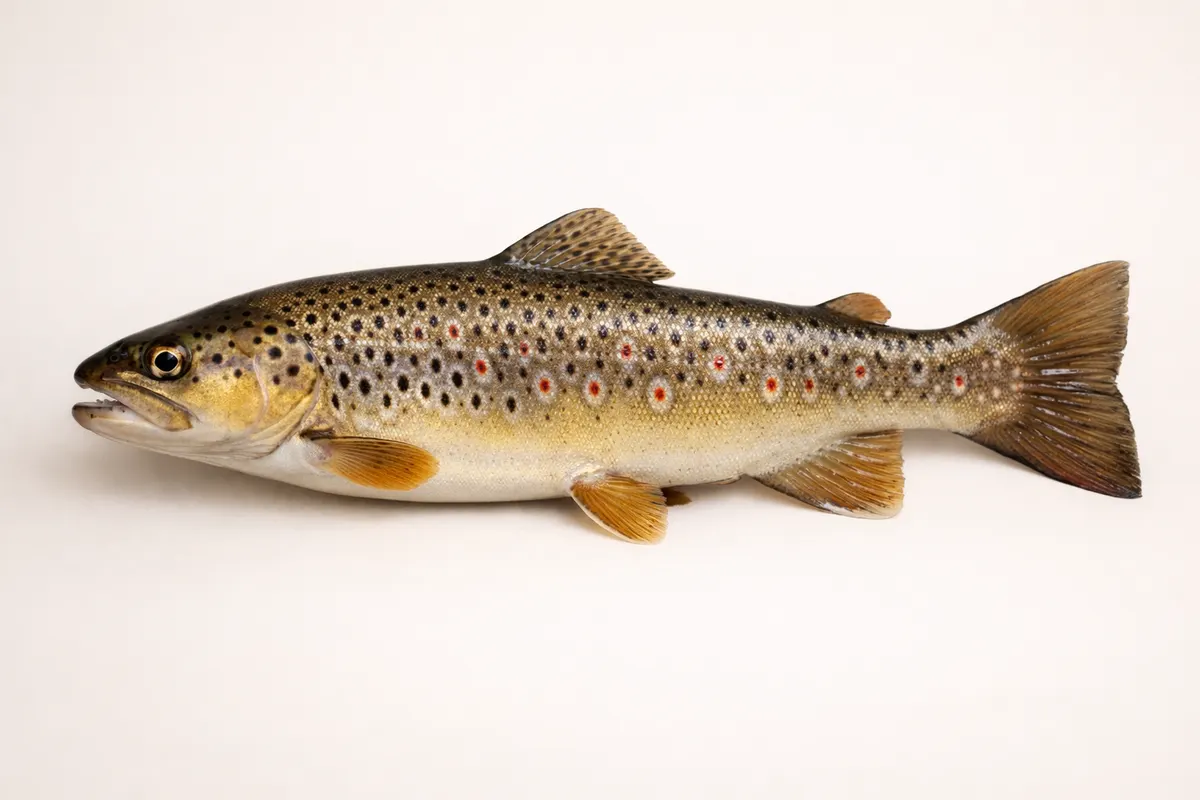
What a brown trout is: species, size, and range
The brown trout (Salmo trutta) is a temperate freshwater salmonid native to Europe and western Asia and widely introduced elsewhere. Adults typically range from 20 to 60 cm (8–24 in) in rivers and lakes; trophy specimens can exceed a meter in optimal lakes or sea-run populations.
Morphologically it’s a deep-bodied trout with a slightly rounded to squared tail, an adipose fin like other trout, and a lateral line that may show scattered spotting. Color varies with habitat: bright golden-brown in clear, weedy lakes; darker and more mottled in shaded streams.
Brown trout are known for adaptable life histories: resident freshwater fish, lake-dwelling forms, and anadromous sea-run “sea trout” that return to freshwater to spawn. That ecological flexibility explains why a single photo must be compared against location and season before concluding identity.
- Scientific name: Salmo trutta; family Salmonidae.
- Typical adult length: 20–60 cm in rivers and lakes; variable by form.
- Notable behavior: territorial feeding in streams; nocturnal or low-light activity in warmer months.
How can you confirm brown trout identification from photos?
Start with the big-picture silhouette: brown trout have a robust, laterally compressed body and a head proportionally long but not as blunt as some bass. Compare the placement of the dorsal fin (mid-back) and the rounded tail—these proportions help rule out non-salmonids at a glance.
Next, inspect spotting and color pattern. Brown trout typically show dark brown to black spots on the back and upper sides and red, orange, or brown spots surrounded by pale halos on the lower sides. The density and color of spots change with habitat—lake fish often have larger, more diffuse spots than stream residents.
Look for key fin and scale cues: a smooth, unbroken lateral line; small cycloid scales (visible at close range); and a lightly hooked lower jaw in adults, especially males during spawning. Pay attention to the gill cover edge—no large bony knob as seen on some other species.
Finally, combine visible traits with location and size. A 10‑cm fish in a small spring is unlikely to be the same life stage as a 50‑cm brown trout from a stocked reservoir. When evidence conflicts, list which clues match a brown trout and which do not before deciding.
- Silhouette: deep body, mid-back dorsal fin, rounded tail.
- Spots: dark back spots and distinctive red/orange spots with pale halos on the sides.
- Jaw: lower jaw can project slightly in adult males, more pronounced during spawning.
- Lateral line: continuous, not strongly arched or interrupted.
Key facts about brown trout
The table below summarizes field-friendly attributes you can check in a photo or quick observation. Use these rows as an identification checklist: visible size, dominant color patterns, typical habitats, active seasons, and the single easiest distinguishing mark to spot.
| Attribute | Typical | Photo clues |
|---|---|---|
| Size | 20–60 cm (most adults) | Compare with nearby objects; juveniles under 15 cm show parr marks. |
| Colouring | Brown/golden base with dark and red/orange spots | Pale halos around red/orange spots on the flanks. |
| Habitat | Rivers, streams, lakes; sea-run forms in coastal waters | Look at substrate, flow, and vegetation in the background. |
| Active season | Year-round feeders; peak visibility in spring and fall | Brighter colors and spawning hooks in autumn males. |
| Distinguishing feature | Red/orange flank spots with pale halos | Spot color and halo pattern are especially diagnostic. |
- Use a ruler or an object of known size in your photo to estimate length—size helps separate juveniles from adults and resident forms from sea-run fish.
- Color alone is insufficient; combine spot pattern, body shape, and habitat clues for a reliable ID.
Where and when you'll encounter brown trout
Brown trout occur in a wide range of freshwater habitats and are one of the most broadly introduced trout species. Your best chance to photograph or observe them depends on region, type of waterbody, and time of day.
River and stream brown trout are often visible in riffles, pocket water, and near undercut banks at low light—early morning or dusk. Lake brown trout may hold along weed edges, drop-offs, or near inflow streams especially in spring and fall.
Sea-run (anadromous) brown trout migrate into estuaries and coastal waters; these individuals can look leaner and silvery compared with lake or stream residents. Always note the habitat cues in your photo because distribution and behavior narrow identification more than color alone.
| Region / Habitat | When you'll see it | What you'll notice |
|---|---|---|
| Native Europe & West Asia | Year-round, seasonal spawning in autumn | Strong spot contrast and varied body morphs |
| Introduced North America | Spring and fall most active; stocked populations year-round | Variable size; lake forms larger where food is abundant |
| Streams and small rivers | Low-light periods, holding in pools | Mottled dorsum, territorial behavior |
| Lakes & reservoirs | Spring turnover and autumn feeding peaks | Larger body, paler flank background |
| Estuaries / sea-run | During migration windows (regional) | Silvery flanks, leaner profile |
- Morning and evening: best light and more active feeding behavior.
- Clear riffles and shaded pools: typical stream holding spots.
- Weed edges and drop-offs: lake locations where brown trout feed and ambush prey.
Brown trout lookalikes and how to tell them apart
Brown trout are most frequently mistaken for brook trout, rainbow trout, and juvenile Atlantic salmon in certain ranges. The key to separating them in photos is focusing on spot pattern, background color, and body proportions rather than a single trait.
Brook trout (Salvelinus fontinalis) are char, not true trout, and usually show worm-like vermiculations on the back and lighter spots on a darker background; brook trout also often have white leading edges on the paired fins. Those white edges are absent on brown trout.
Rainbow trout show a broad pinkish stripe along the flank and more evenly distributed black spots on the tail and body. Juvenile Atlantic salmon may resemble trout but usually lack the warm orange flank spots with pale halos that identify brown trout.
- White fin edges = brook trout (char) in many cases — brown trout lack that clear margin.
- Pink lateral stripe = rainbow trout; brown trout lack a persistent, broad pink band.
- Spot halos (pale rings) around orange/red spots = strong indicator of brown trout.
Handling brown trout: safe field care
If you plan to handle a brown trout for photos, minimize air exposure and support the fish horizontally with wet hands or a wet cloth. Avoid squeezing the body, and remove hooks as quickly as possible with minimal handling.
Keep the fish in water while unhooking when practical, or cradle it just above the surface for a quick photograph. Release stream residents back into calm water and orient them facing upstream until they swim away; exhausted fish may need a short recovery hold.
Respect local laws and seasonal protections. Some populations have closed seasons, size limits, or mandatory catch-and-release rules to protect spawning runs. When in doubt, consult local regulations before fishing or retaining any trout.
- Minimize handling time; aim for under 30 seconds out of water if possible.
- Use barbless hooks to reduce injury and speed release.
- Check local regulations before keeping or moving a fish.
Frequently asked questions
Brown trout vs brook trout: How can I tell which I photographed?
Compare fin margins and body pattern. Brook trout (a char) usually have white leading edges on their pelvic and pectoral fins and worm-like vermiculations on the back; their spots tend to be light on a darker background. Brown trout typically lack white fin edges and show warm orange or red flank spots with pale halos. Also check habitat: brook trout favor cooler, small streams and headwaters, while brown trout tolerate larger rivers and lakes. Use size, spot halo presence, and fin edge color in your photo to decide.
What are the top three photo clues that confirm a brown trout?
First, look for red or orange flank spots set in pale halos—this is highly indicative of brown trout. Second, note the overall silhouette: a robust, slightly deep body with a mid-back dorsal fin and rounded tail. Third, check the absence of white leading edges on the paired fins (if present, the fish is likely a brook trout or char). Combine these with habitat and size for best confidence.
How certain can I be identifying brown trout from a single picture I took while fishing?
A single photo can give good clues but rarely guarantees species-level certainty. Lighting, angle, and color shifts in camera sensors affect apparent patterns. State your confidence: list the matching clues (spot halos, silhouette, habitat) and the uncertainties (partial view, glare, juvenile stage). If you need higher confidence, gather a second photo from the opposite side, include a size reference, and note the location and time of year.
Are there legal or safety limits I should know about when handling or keeping brown trout?
Yes. Many jurisdictions regulate trout seasons, size limits, and catch-and-release rules, especially for wild or spawning populations. Handling can stress fish—use wet hands, minimize air exposure, and follow local conservation rules. Never assume you may retain a fish; check state or regional fisheries regulations before keeping or transporting any trout.
Related guides
Compare your photo to Brown Trout clues with Fish Identifier
If you want a structured first pass, use Fish Identifier to compare your photo against the brown trout clues on this page. The tool highlights matching visual signals and flags uncertain traits so you can decide whether additional photos or local regulation checks are needed. Try the photo comparison at https://fish-identification.app/tools/fish-identifier as an optional next step—remember that a single image rarely proves species identity, so consider multiple views and local context.
Take the next step →